

January 16, 2026 8 min read
Top Signs Your Garage Door Needs Repair in California
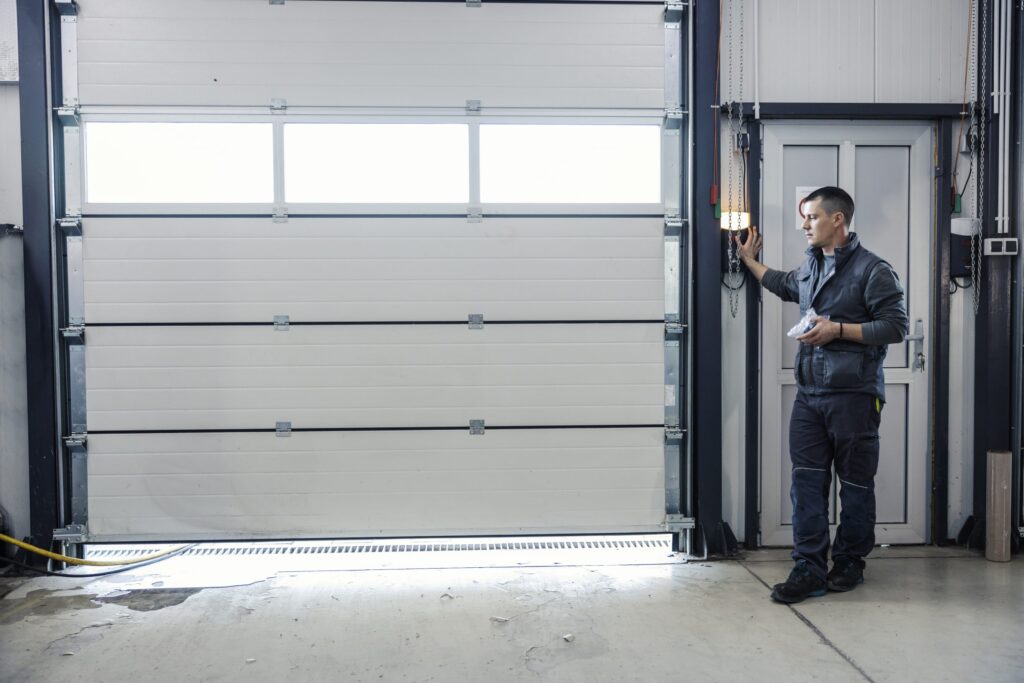
Think your garage door is fine? These California clues say otherwise
Those signs start small. Foggy San Jose morning: you tap the remote, the door hesitates, squeals, then jerks—salt mist sticks rollers. Fresno afternoon at 105°F (degrees Fahrenheit): the opener strains and reverses halfway as springs relax in the heat. Both are warnings, not quirks. Catch them early and you avoid a crooked slam or a burned-out motor.
Santa Ana winds in Orange County: gusts rattle an aluminum-and-glass door, it starts chattering on the tracks, and a week later a roller pops. After a small tremor, a barely-shifted track chews through wheels every cycle. Add a blackout, pull the manual release on an unbalanced door, and it can free-fall. Spot the whispers before they become emergencies. So why do tiny quirks snowball here?
Why small garage door issues escalate fast in California
Why do tiny quirks snowball here? California pounds your door with salt air, inland heat/UV (ultraviolet sunlight), Santa Ana winds, small quakes, and wildfire ash. Together, they corrode cables and hinges, dry out seals, pit rollers and tracks, and confuse electronics. Power shutoffs mean manual releases; an unbalanced door can slam. And codes matter: SB 969 requires battery backup openers on new installs since 2019, and photo-eyes (safety sensors) must be present and aligned.
Here’s a quick California stress map so you can recognize your local risk. Think coast, valley, canyon, and fire zones. Spot your area below, then we’ll show the exact warning signs to watch.
- Coastal salt/fog (SF, Monterey, Santa Cruz): steel corrosion; pitted rollers and tracks.
- Inland heat/UV (Sacramento, Fresno, Bakersfield): dried weatherstripping; brittle plastics and weakened springs.
- Santa Ana winds (LA/OC/Ventura): wind load flexes panels; loosens track fasteners.
- Seismic activity (Bay Area, SoCal): subtle shifts cause misalignment and binding.
- Wildfire smoke/ash (statewide): photo-eyes obstructed; gritty tracks eat rollers.
12 unmistakable signs your garage door needs repair
Here’s the checklist California homeowners notice first: noises, hesitation, reversals, drafts, and new vibrations. Catch one and act quickly—especially around springs and cables under tension.
- Sign 1: Loud grinding or squealing: worn rollers, dry bearings, or a misaligned track.
- Sign 2: Sluggish opening/closing: failing springs or a weakening opener motor.
- Sign 3: Door reverses or won’t stay down: dirty/misaligned photo-eyes or force settings/spring imbalance.
- Sign 4: Uneven or sagging door: cable stretch, off-track rollers, or panel warping.
- Sign 5: Frayed or rusted cables: severe injury risk—stop using and call a pro now.
- Sign 6: Excessive vibration/shaking: loose hardware or misaligned tracks and hinges.
- Sign 7: Popping/banging springs: fatigue nearing failure—never DIY torsion or extension springs.
- Sign 8: Drafts or light at the bottom/edges: worn weatherstripping or track/hinge issues.
- Sign 9: Cracked, dented, or water-damaged panels: structure and security are compromised.
- Sign 10: Opener light blinking codes: see our guide on opener light flashing for likely causes and safe fixes.
- Sign 11: Intermittent remote/keypad response: radio frequency (RF) interference, weak battery, or a failing logic board.
- Sign 12: Burning smell or hot motor housing: opener strain—failure is imminent; disconnect and call us.
Diagnosing from a safe distance is fine, but don’t touch springs, cables, bottom brackets, or torsion bars—these are high‑tension parts. We work on them daily with the right tools; you shouldn’t. Call us before forcing anything.
What happens if you wait: costs and risks in California
In California, small issues snowball because salt, heat, wind, and tremors add stress every day. Waiting often turns a $120 tune-up into a $600+ repair. Here’s a quick matrix: the sign you see, the likely cause, the risk if ignored, and typical California repair ranges. These are reasonable ranges, not quotes.
| Sign | Likely cause | Risk if ignored | Typical CA repair range |
|---|---|---|---|
| Noisy operation | Dry bearings or worn rollers | Roller failure, off-track event | $120–$280 (lube/rollers) |
| Door reverses to open | Misaligned or dirty photo-eyes | Door won’t secure, safety hazard | $95–$180 (sensor service) |
| Uneven or sagging door | Cable stretch or track misalignment | Off-track, panel stress | $150–$350 (cable/track tune) |
| Frayed or rusted cables | Corrosion or fatigue | Sudden drop, severe injury risk | $180–$380 (cables + tune) |
| Opener light blinking | Force limits or motor strain | Motor failure, lockout | $150–$450 (tune/opener service) |
| Light at bottom edge | Worn bottom seal or settled slab | Moisture, pests, energy loss | $90–$220 (seal/adjust) |
Pricing varies by city, door size, and parts availability, but the risks don’t wait. Heat waves, Santa Ana wind events, and post-tremor days accelerate failures and raise safety hazards. If you’re seeing a sign now, plan action today—before weather or outages make it worse.
What to do the moment you notice a sign
You’re seeing a sign now—so act today, safely. Use this 2‑minute checklist to stabilize the door, confirm safety, and document issues before we arrive. It works whether you’re facing a heat wave or a blackout.
- Step 1: Power and people safety: Keep kids and pets away, stop the opener, and never stand under or walk beneath a moving or crooked door.
- Step 2: Test auto-reverse: Place a 2×4 (a scrap board) under the door; close it. It must stop and reverse. Required on California openers since 1993.
- Step 3: Check photo-eyes: Wipe lenses, align them level, and make sure both sensor LEDs (indicator lights) are solid—not blinking or dim.
- Step 4: Disengage/observe manually: With the door fully down, pull the red cord, then lift halfway. If it drops or binds, stop and call us.
- Step 5: Tighten/inspect hardware: Look for loose hinge screws, wobbly brackets, and track bolts. Snug gently—do not loosen or adjust spring or bottom bracket fasteners.
- Step 6: Lubricate moving parts: Use garage-door silicone or lithium lube on rollers, hinges, and springs. Never spray WD‑40; it’s a cleaner, not a lubricant.
- Step 7: Document symptoms: Record a 10–15 second video of the noise/action and any opener light blink patterns to speed diagnosis and quoting.
- Step 8: Call a pro for tensioned parts: Never adjust springs, cables, or bottom brackets—these store lethal energy. We handle them same day across California.
Short-term triage keeps you safe; lasting fixes mean parts matched to California’s climate and codes. Think stainless at the coast, high‑cycle springs inland, wind reinforcement, and compliant openers. Let’s talk smart upgrades that prevent repeats.
California-specific fixes and upgrades that solve root causes
On the coast, we swap in stainless hardware and sealed nylon rollers to beat salt. Wind zones get reinforced tracks and through‑bolted fasteners. Inland, high‑cycle torsion springs handle daily EV (electric vehicle) charging cycles, and insulated doors help with Title 24 (California energy efficiency code) targets. In WUI (Wildland‑Urban Interface) areas, we add premium perimeter weatherstripping to block embers and smoke.
Result: smoother travel, less strain on the opener, and fewer surprise failures during heat waves or outages. We schedule lube-and-tune every 12 months (or every 6 months for high‑cycle households). For sensors, we install hooded photocell covers and weatherproof grommets to keep ash and drizzle off the lenses, and we seal opener electronics against coastal humidity. That’s how you avoid repeat service calls.
⚖️
Compliance Note
California SB 969 requires battery‑backup openers on new or replacement installs since 2019. If your opener lacks backup, we’ll recommend a compliant model so you can enter and exit safely during outages.
We also recommend modern controls for reliability and security: Wi‑Fi monitoring, real‑time alerts, and scheduled close so you’re covered during travel, school pickups, and rolling blackouts.
Upgrade to Wi‑Fi‑enabled garage door openers for remote alerts, activity logs, and secure access sharing—handy when you’re traveling, coordinating deliveries, or riding out PSPS (public safety power shutoff) events and blackouts.
California case snapshots: real fixes, real results
So after Wi‑Fi alerts and blackout readiness, what does a real fix look like? Three quick California snapshots—symptom → fix → result—so you can picture your outcome.
- San Mateo (coastal): Grinding every cycle from corroded rollers; we installed stainless hinges with sealed nylon rollers, tuned tracks, and rebalanced the door. Result: noise gone, smoother, safer travel.
- Sacramento (heat/UV): Brittle bottom seal left a daylight gap; we replaced weatherstripping and set the close stop carefully. Result: cooler garage, fewer pests, better seal during 105°F afternoons.
- Los Angeles (wind/seismic): Door kept reversing with blinking light; we realigned photo-eyes (safety sensors), reinforced fasteners, and installed a battery‑backup opener. Result: consistent closing during outages and tremors.
Style-specific warning signs and upgrade paths
That LA fix worked because style and build matter—different doors handle outages, wind, and tremors differently. Material, weight, and panel design change wear and drive smarter upgrades. Next, we’ll draw the DIY vs. pro line.
- Victorian: Heavy carriage-style panels strain hinges; watch for sag and squeaks at the jambs. We add reinforced pivots and high‑cycle springs—see Garage Doors for Victorian-Style Homes.
- Craftsman: Cedar or hemlock panels shift with moisture, throwing weight off center; look for bowing and popping hinges. We balance with correct spring specs and struts—see Garage Doors for Craftsman-Style Homes.
- Modern Farmhouse: Wide-plank looks hide big, insulated sections; weight adds up, and open layouts echo noise. We prioritize quiet belt drives and R‑value (insulation) upgrades—see How to Choose a Modern Farmhouse Garage Door.
DIY vs. Pro: What’s Safe to Handle—and What’s Not
Those style-specific tips are smart—now draw the safety line. Quick wins: wipe sensors, lube rollers, swap weatherstrips. Pro-only: springs, cables, track fixes. If a task involves tension, weight, or alignment, we take it.
| Task | DIY‑friendly? | Tools/Materials | Risk level | When to call a pro |
|---|---|---|---|---|
| Lubricate rollers and hinges | Yes — simple maintenance | Garage-door rated silicone or lithium lube | Low | If noise persists after proper lube |
| Clean and align photo-eyes | Yes | Soft cloth, gentle cleaner, small level | Low | If LEDs keep blinking or stay misaligned |
| Test auto-reverse safety | Yes | 2×4 block (scrap board) | Low | If door fails or force feels high |
| Replace bottom seal | Maybe — depends on skill | Utility knife, bottom seal kit | Medium | If gap remains from slab or track issues |
| Tighten loose hardware | Maybe — avoid spring brackets | Sockets, nut driver, threadlocker | Medium | If fasteners won’t hold or metal is deformed |
| Spring replacement | No | N/A | High | Always — springs store dangerous tension |
| Cable replacement | No | N/A | High | Always — cable failures can cause severe injury |
| Track realignment or structural | No | N/A | High | If door binds, scrapes, or has jumped track |
California homeowner FAQs about garage door repairs
If your door binds, scrapes, or has jumped track, that’s pro‑only. Still have questions? Here are California‑specific answers on codes, heat, outages, and quakes so you can decide confidently.
- Q: Are battery‑backup openers required in California? Yes. SB 969 (California’s battery‑backup law) applies to new or replacement openers since 2019. During outages and PSPS events (public safety power shutoffs), backup lets you open and close safely, without getting trapped outside.
- Q: How long do garage door springs last here? Standard springs are rated around 10,000 cycles (one open/close). Heavy daily use, heat, and coastal corrosion shorten life. We often spec 20,000–30,000‑cycle upgrades for electric vehicle (EV) families and multi‑car households.
- Q: What R‑value should I consider for Central Valley heat? Aim for R‑12 to R‑16 minimum; R‑18+ is ideal. Insulated sections cut garage temps by 10–20°F, reduce opener strain, and quiet the door during 100°F afternoons.
- Q: My opener light is blinking — can I keep using it? Treat it as a safety flag. Wipe and align photo‑eyes; indicator lights should be solid. If it still blinks or reverses, stop power, check blinking guide above, and call us.
- Q: Do small earthquakes affect garage doors? Yes. Even minor tremors can nudge tracks and brackets, causing scraping or gaps. After a quake, do a visual and balance check; if it binds or got louder, schedule a tune‑up.
California homeowners: book your 20‑point safety check today
If your door got louder after that tremor—or failed a quick balance check—book our 20‑point safety visit. We’ll inspect springs, cables, tracks, sensors, and opener settings, then give you written options and clear pricing. Same‑ or next‑day in the Bay Area, Sacramento, LA/OC, San Diego, and the Central Valley. No pressure—just facts and a safe, quiet door.
Want zero hassle? Choose an after‑work window, get text updates as we head your way, and approve repairs only after a written estimate. Most fixes wrap in 60–90 minutes, and your trip fee is $0 with repair. We’ll secure the opening, quiet the door, and confirm safety features before we leave. Ready when you are.Schedule my safety checkk, you’ll find him coaching youth soccer. On the job, it’s clean installs, clear pricing, and zero shortcuts.
 French
  English