

January 16, 2026 9 min read
California Garage Door Opener Repair: 9 Signs You Need Help Now
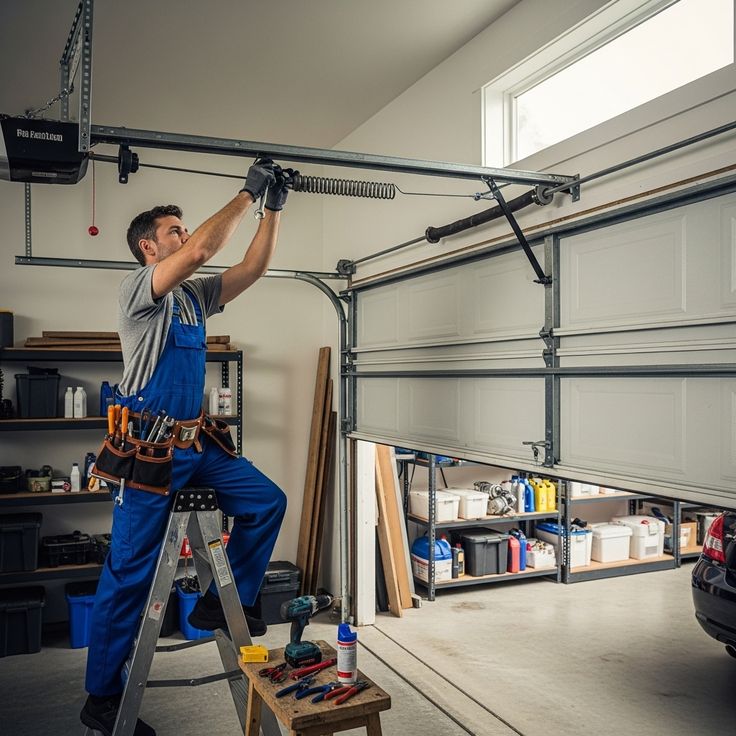
Stuck garage door, packed California morning. Now what?
Oakland school run, coffee half sipped, you tap the remote and… nothing. You try the wall button, still stuck. Traffic’s already a parking lot by 7:30, and the late drop-off fee clocks in at $25. Your car’s trapped, the driveway’s blocked, and the street sweeper is coming. We see this every week in California’s garage-centered homes. One minute it hums; the next it refuses to budge. You need answers fast. And a safe fix that doesn’t turn into an all-day saga.
Or it’s an LA commute day—garage opens halfway, grinds, and slams back down. In the Inland Empire heat, the opener’s been noisy for months; today it won’t close, leaving your home exposed. Up north, Bay Area drizzle fogs the safety sensors, and the door keeps reversing with bikes in the way. At Go Pro Garage, we handle this across coastal, valley, and mountain neighborhoods—licensed, insured, and multi-brand. Call us and we’ll triage by phone, then aim for same-day or next-day so you’re rolling again.
Why do openers fail here so often, and how do you catch the early warnings? We’ll show you the California-specific causes, the 9 signs to watch, and the safest next step.
Why California beats up garage door openers
You asked why openers fail here so often—California throws extra curveballs. Coastal salt air corrodes rails, hinges, and sensor brackets within a season. Central Valley heat bakes plastic housings and stresses circuit boards. Mountain cold thickens lubricant, so motors strain at dawn. Add seismic vibrations that nudge tracks out of alignment, plus dust and wildfire ash that blind photo-eyes (the safety sensors). Then there are PSPS (Public Safety Power Shutoff) events and quick power returns that spike voltage, cooking delicate boards and capacitors.
That mix means maintenance intervals aren’t one-size-fits-all. On the coast, a light lube and sensor cleaning every 3 months beats corrosion. Inland, plan biannual lubrication with a non-gumming, garage-safe grease and monthly dusting of sensors. In colder elevations, we swap to silicone-based lubricant (stays fluid in low temps) and recalibrate force/limits after freezes. Across regions, sensor reliability matters most: clean lenses, snug brackets, and good wiring keep doors closing smoothly, while fresh lube prevents strain and noise.
Two rules drive safety here. UL 325 (national garage-door safety standard) requires photo-eye sensors that auto-reverse when the beam is blocked. California SB-969 (state law) mandates battery backup on any new opener installed after 7/1/2019. Replacements can trigger HOA (homeowners association) noise/appearance rules and, in some cities, simple permits. We guide you through all of it.
Ready to spot trouble early? Next, we’ll decode nine California-common warning signs and the safe first steps.
9 signs your opener needs repair, with quick next steps
These patterns show up in most California calls we run. For each one, try a safe step first—then call us if it persists.
Sign 1: Motor keeps running after the door stops. Unplug for 60 seconds, replug, and check travel/force limits. Likely limit switch or logic board fault.
Sign 2: Door reverses at the floor or before closing. Gently clean and realign the photo-eyes; remove debris or track obstructions and retest.
Sign 3: Moves partway, then stalls. Pull the red release, test door balance by hand, and look for binding. Could be weak spring or mis-set travel limits.
Sign 4: Randomly opens or closes. Clear and reprogram remotes, check for a stuck wall button, and consider RF (radio frequency) interference or a failing board.
Sign 5: After storm or outage, nothing works. Check the GFCI (ground-fault outlet) and any surge protector. Suspect a fried logic board or start capacitor.
Sign 6: Chain or belt sagging, grinding, or jerky. Inspect for slack, worn sprockets, or rail damage—do not over-tighten; that masks deeper issues.
Sign 7: Wall button and remotes dead. Replace remote batteries, verify lock/vacation mode isn’t on, then suspect wall-wire breaks or a bad receiver.
Sign 8: Opener lights blinking repeatedly. Confirm sensor LEDs are solid and aligned; if unsure, see our opener lights blinking guide for meanings.
Sign 9: Humming motor, no movement. Disconnect the door to isolate a seized trolley or stripped gear. Stop running it to avoid burning the motor.
In Sign 8, we included a single internal link to Garage Door Opener Flashing: causes & fixes—look for opener lights blinking and follow it only once on this page.
Why waiting makes opener problems worse here
Delays raise real safety stakes. If springs are involved, a heavy door can freefall and crush a bumper—or worse. Bypassing sensors puts kids and pets at risk. Leaving doors open invites HOA violations and fines. During wildfire smoke or PSPS (planned power shutoffs), no battery backup means you can’t leave fast or secure the home. Small warning signs turn into stuck doors at the worst time.
There’s also security and weather to consider. A door that won’t close invites theft, water intrusion during coastal storms, and wind-blown debris. If someone is injured because a safety feature was bypassed, liability shifts your way. We keep urgency high, but calm: stop forcing it, and we’ll get you a safe path forward.
Electronics hate indecision. Repeated surges and a humming motor strain capacitors and logic boards, turning a simple limit or sensor fix into a motor or opener replacement—faster in salty coastal air or Central Valley heat. Early intervention saves hardware and money.
Before scheduling, here’s a safe same-day checklist to rule out simple issues without risking injury or voiding warranties.
Safe checks today—and what not to touch
These steps are safe for most California homes and typically won’t void warranties. If anything feels risky, stop and call.
- Check: Vacation/lock button on the wall console isn’t enabled.
- Clean: Photo eyes with a microfiber cloth; confirm LEDs are solid and aligned.
- Replace: Remote batteries; reprogram per the manual if buttons still lag.
- Test: GFCI/outlet for power; try a different outlet to confirm supply.
- Inspect: Obvious track obstructions or bent rollers; do not remove springs.
- Reset: Unplug 60 seconds, replug, then test and reset travel limits.
- Verify: Wi‑Fi/app status and home router signal after outages.
Do not DIY: springs, high‑tension cables, opener internal gears/capacitors, or rail disassembly. These carry serious injury risk and can worsen damage.
Our California opener repair framework
We offer same-day or next-day windows with stocked trucks, then deliver code-aware repairs and quiet performance. Our diagnostics end with clear options, and we test every safety feature to UL 325 and verify SB‑969 battery backup compliance. You get safe, reliable, California-ready operation.
| Step | Focus in California | What We Test/Adjust | Benefit to You |
|---|---|---|---|
| Step 1: Safety and power baseline | Safety + Power for PSPS and surges | Photo eyes, GFCI, surge damage, battery backup unit | Restored safe operation and power resilience |
| Step 2: Mechanical alignment and balance | Mechanics across heat, salt, and vibration | Springs, rollers, rail, trolley engagement | Smooth, quiet travel without strain |
| Step 3: Controls and connectivity | Controls in crowded wireless environments | Remotes, wall console, RF noise, Wi‑Fi signal | Reliable, secure access every time |
| Step 4: Electronics and motor health | Electronics stressed by heat and surges | Logic board, capacitor, motor current draw | Prevents repeat failures and callbacks |
| Step 5: Compliance and safety calibration | Compliance for SB‑969 and UL 325 | Battery backup present, forces within spec | Code‑ready, family‑safe, HOA friendly |
Book a quick diagnostic today—we’ll confirm the issue, share a transparent estimate, and back approved parts with a solid warranty.
Real California fixes: three mini cases
These quick snapshots show how we solve common failures across coastal, inland, and urban garages—fast, safe, and compliant.
- San Jose: After a new dual‑band router, remotes were unreliable. We reprogrammed remotes, changed codes, moved the antenna, and added surge protection—fixed in one visit.
- Sacramento: Post‑PSPS (power shutoff) hum with no lift. We replaced the start capacitor, reset travel/force, and tested battery backup—back online in 90 minutes.
- Santa Monica: Reversing at the floor from corroded sensor brackets. We cleaned lenses, replaced brackets, tightened wiring, and tuned force settings—quiet, compliant close.
Repair or replace your opener in California?
That quiet, compliant close is the goal—now, should you repair or replace? This guide weighs age, safety sensors, parts availability, and outage readiness for California homes, so you can choose confidently and avoid surprises on timing and budget.
| Scenario | Likely Path | Typical Turnaround | Why (California) |
|---|---|---|---|
| Under 10 years old, photo eyes (safety sensors) aligned, sudden failure after outage or bump. | Repair: diagnose sensors, limits, or gears; keep your existing unit. | Same day to 2 days, parts on truck. | Parts available; fix protects investment and avoids unnecessary replacement. |
| 15–20+ years old, discontinued model or noisy chain drive. | Replace: modern belt drive with battery backup. | 1–3 days, removal and install scheduled. | Parts scarce; higher energy use and safety lag in attached homes. |
| Pre-1993 opener or missing photo eyes (safety sensors). | Replace: upgrade to UL 325 (national safety) compliant system. | 1–3 days, permit guidance if needed. | Safety noncompliant; must upgrade to protect people and meet standards. |
| Installed after 2019 but no battery backup present. | Replace/Upgrade: add integrated battery backup or compliant opener. | 1–3 days, install and test backup operation during outages. | SB‑969 (state battery backup law) compliance and outage resilience. |
If you’re upgrading, today’s belt drives are whisper‑quiet, add smartphone control and optional camera, and include required battery backup—perfect for attached garages and for PSPS (Public Safety Power Shutoff) days. Your house sleeps, your door still works.
Want details before you choose? See our smart, Wi‑Fi‑enabled openers guide to compare range, security, and cameras.
Match your opener to your home’s style
In attached garages and ADUs (accessory dwelling units), quiet drive types and insulated doors protect sleep, energy, and HOA (homeowners association) harmony. Heritage homes in San Francisco (SF), Pasadena, and Napa benefit from unobtrusive, vibration‑isolated openers that respect trim, plaster, and original wood.
- Victorian: For SF Painted Ladies, choose ultra‑quiet belt drives and tasteful hardware; see our Victorian garage door ideas for trim‑friendly designs.
- Modern Farmhouse: Get carriage‑style looks with quiet, battery‑backed tech; compare options in our Modern Farmhouse guide.
- Craftsman: Heavier wood panels need strong, quiet openers; explore compatible garage doors and drive choices that keep the bungalow vibe.
California Garage Door Opener Repair FAQs
Choosing the right opener for a Craftsman or modern build is step one; next, here are the quick answers California homeowners ask us before they book.
- Most repairs land $175–$450 total after diagnostic credit; sensors/alignment are lowest, gear or capacitor mid, logic board highest. Brand and parts availability matter. After-hours emergencies add a surcharge; we quote upfront before work.
- Yes—many zip codes get same‑day or next‑day. We offer 2–3 hour arrival windows with text updates. Traffic and parts stock vary by area; mark ‘stuck door’ for priority. Rural or mountain routes may shift to the first window tomorrow.
- SB‑969 is California’s battery‑backup law: any opener installed after July 1, 2019 must include a working backup battery. You don’t have to retrofit older units, but adding backup improves safety and PSPS (Public Safety Power Shutoff) resilience.
- Often yes—we reprogram compatible remotes and keypads during service. If your opener uses older fixed‑code remotes or mismatched frequencies, we pair a universal receiver or suggest new accessories that meet today’s rolling‑code (changing signal every press) security.
- Yes—after diagnosis, we share an upfront quote and stand behind approved repairs with a standard parts-and-labor warranty period. Manufacturer parts carry their own terms; we document both on your invoice and explain what’s covered before we start.
- We test power at the outlet and GFCI (ground‑fault circuit interrupter), inspect the logic board and start capacitor, then quote repair or replacement. We also recommend surge protection—either an inline opener protector or a whole‑home device—to reduce future failures.
- We serve Sacramento, the Bay Area (San Francisco, East Bay, South Bay), Los Angeles, Orange County, and San Diego. Nearby communities along those corridors are covered too—ask when you call with your ZIP.
- Most repairs finish in 60–120 minutes: sensor alignment or limit recalibration 45–75, gear or capacitor 60–90, logic board 60–120. Full opener replacement with battery backup usually takes 2–3 hours including removal, setup, and safety testing.
Book Your California Opener Repair Today
Ready for that 60–120 minute fix—or a 2–3 hour replacement if needed? Book now and we’ll route a CSLB‑licensed (state contractor license) and insured tech for same‑day or next‑day in many California ZIPs. We’ll perform UL 325 (national safety standard) checks, verify SB‑969 (battery‑backup law) compliance, and give an estimate before work. You’ll get an arrival window, text updates, cleanup, and warranty. Car trapped? Select “stuck door” for priority.Call NowSchedule Online
Stay Compliant, Safe, and Whisper‑Quiet
Scheduled online? Great—here’s how to keep things compliant and quiet between tune‑ups. Once a month, wipe and aim the photo eyes (the safety sensors) and run the 2×4 test to confirm auto‑reverse. After outages, check the battery backup; SB‑969 (California’s battery‑backup law) means new installs must have one—press the button or unplug briefly to verify a smooth cycle. Want less noise in attached garages or an ADU (accessory dwelling unit)? Consider a belt‑drive with vibration isolation and LED (light‑emitting diode) bulbs that don’t cause interference.
 French
  English