

February 9, 20268 min read
Cable Snapped? California’s Fast, Safe Garage Door Cable Repair—Go Pro Garage
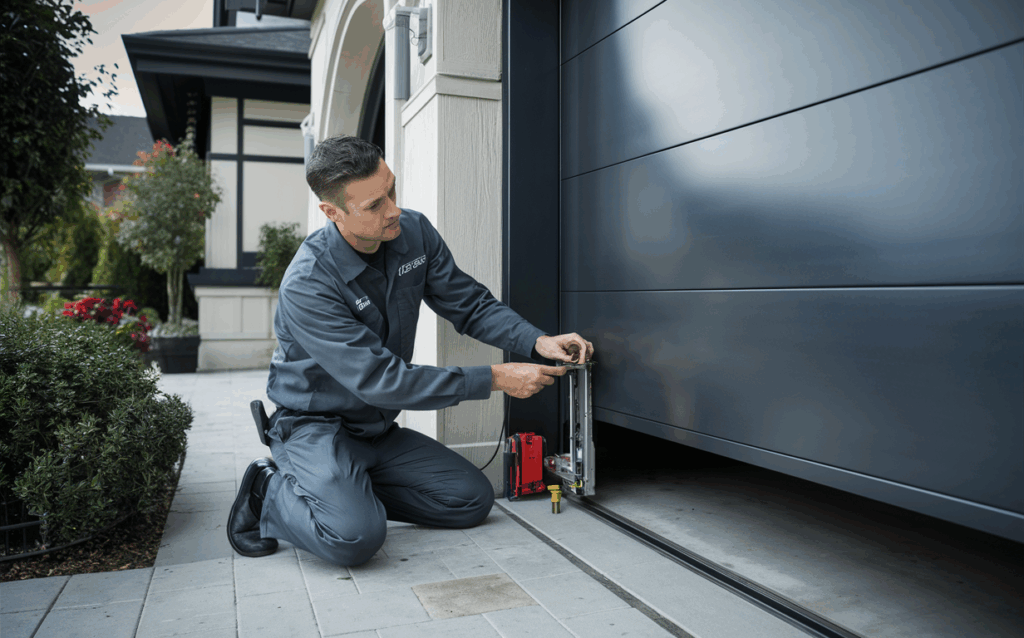
Cable snapped before the 101 commute? Read this first.
7:10 a.m. in San Jose. You hit the remote, the door lifts an inch, tilts, then—POP—like a starter pistol. One cable unspools, slaps the track, and your car is trapped while the 101 is already turning red. Kids are still brushing teeth. The power just flickered from a Public Safety Power Shutoff (PSPS—planned wildfire outage), and your heart spikes. You hit the button again. Nothing. The opener strains, groans, and stops.
You reach for the red release. Don’t—if the door isn’t fully down, that 180‑plus‑pound panel can freefall. Step back, keep pets out, and resist forcing it. We see this after heat waves, salty coastal air, even a midnight tremor—the cable frays, jumps the drum, and the door sags three inches to one side. Now you’re late, coffee’s cold, and every minute counts.
So why do cables fail more in California—salt air, heat, dust, quakes—and what’s the safest move right now? We’ll break it down, plus code twists like UL 325 (opener safety rules) and SB‑969 (battery‑backup requirement) that change the playbook.
Why Garage Door Cables Fail Faster in California
You asked why it happens more here; first, what a lift cable does. It winds around drums at the top of your door, working with the springs (the counterbalance that makes a 200‑pound door feel light) to raise and lower smoothly. California adds stress: salty air in SF and Monterey Bay corrodes strands at the loop and drum. Central Valley wildfire ash and dust grind into grooves. High Desert temperature swings bake off lubricant. Seismic jolts loosen fasteners, nudging tracks and overloading one side.
Now layer daily life and housing. Heavy wood or glass doors common in CA load cables harder; older hardware from 1970s–90s homes means worn drums and bearings. EV households and ADUs cycle doors 8–20 times a day, aging cables faster. A tiny misalignment plus grit can cut lifespan from years to months. That’s why we replace cables in pairs and re‑balance the whole system. Good news: small symptoms show up before a break—watch for them next.
Quick compliance note: SB‑969 (California law since 7/1/2019) requires any new opener to include battery backup. During cable repairs we’ll flag non‑compliant units and, if you’re replacing an opener, recommend compliant models—critical for PSPS wildfire outages.
Spot Cable Trouble Before It Strands You
Use this quick checklist to catch cable problems early and avoid a sudden jam.
- Frayed strands: Bird‑caging or broken wire filaments near the drum or bottom bracket.
- Uneven door: One side sits lower; daylight gap at one corner.
- Slack cable: Spooling loosely, wavy wraps, or slipping off the drum.
- Grinding/metal click: Sharpened scraping or ticks near drums or pulleys as cable rubs.
- Door jerks or stalls: Choppy travel; opener strains or reverses mid‑lift.
- Visible rust: Brown/orange staining on cable, brackets, or drums—worse in coastal or damp garages.
Each symptom maps to a likely cause and risk level—use the table to choose safely.
| Symptom | Likely Cause | Risk Level | Can You Use the Door? | Pro Tip |
|---|---|---|---|---|
| Frayed strands near drum or bracket | Fatigue from imbalance and moisture corrosion | High | No | Stop use; schedule a pro ASAP |
| Uneven door; one side low | Cable slipped a drum tooth | High | No | Door can jam; don’t force it |
| Slack cable on one side | Loose drum set‑screw or torsion issue | High | No | Forcing can unwind the opposite side |
| Grinding or metal click | Cable rubbing the drum flange | Medium | Avoid | May indicate misalignment or drum wear |
| Visible rust on cable | Coastal air or condensation | Medium | Limited | Lubricate now; plan replacement |
Why DIY Cable Fixes Fail in California
Tempted to rewind a cable yourself? The hazards stack up fast: torsion springs store enormous energy (use winding bars only), doors weigh 150–400+ pounds, and one mistake can pull the opposite cable off the drum. Openers aren’t winches—forcing them can strip gears or bend rails. California adds wrinkles: HOA rules on exterior work, permit nuances if you touch framing, and SB‑969 requirements when replacing an opener.
Beyond safety, there are consequences. DIY damage can void manufacturer warranties, and insurers may question claims if unlicensed work causes loss. Pros use PPE (gloves, eye protection), solid winding bars, locking pliers, door jacks, and torque/force gauges to set balance and UL 325 (opener safety standard) safety reversal correctly. We also brace the door, lockout the opener, and document settings—steps most garages miss without training.
⚠️ Safety Alert
Stop using the door now. Keep kids and pets clear, don’t pull the red release, and call us for same‑day help. For fastest dispatch statewide, book our emergency garage door repair services California.
How We Fix Your Cable Safely
You reached out for same-day help—here’s exactly what happens when our truck rolls up, usually within a two‑hour arrival window: we lock out power, brace the door, inspect every moving part, replace both cables to spec, re‑spool cleanly, set spring tension precisely, and run full safety tests tailored to California conditions.
Wonder what that looks like? Here’s the step‑by‑step visit you can expect in about 60–90 minutes.
Step 1: Secure and de-energize— Unplug the opener, lock out power, clamp both tracks, brace the door, and verify spring type and state before touching a single wrap.
Step 2: Diagnose— Inspect drums, cables, end and center bearings, rollers, hinges, fasteners, and tracks; find why it failed: corrosion, misalignment, worn bearings, or set‑screws loose.
Step 3: Replace/respoll— Fit matching cable gauge and length for your door, clean drum grooves, then re‑spool tight, even wraps with correct cable keepers and bottom bracket pins.
Step 4: Balance and tension— Set spring torque precisely with calibrated winding bars, confirm the door holds mid‑travel, and verify level, smooth movement across the full cycle.
Step 5: Safety tests— Run force‑reversal per UL 325 (U.S. opener safety standard), align photo‑eyes, test manual release, and set travel and force limits to manufacturer spec.
Step 6: Final tune and lube— Retorque fasteners, lubricate bearings, rollers, and springs, review care tips, and share before/after photos plus warranty on parts and labor.
One more thing: cable failures often reveal weak or mismatched springs. If lift feels heavy or the door won’t hold halfway, ask us about garage door spring replacement and repair California during the same visit to restore true balance.
San Jose Case Study: Jammed at 7:32, Smooth by Lunch
That hidden imbalance we mentioned showed up in Willow Glen last Tuesday. 7:32 a.m. call—left cable frayed, door cocked 4 inches. We arrived 8:55, secured the door, replaced both cables, cleaned drums, re‑balanced springs, and safety‑tested. The opener motor had been straining, so we serviced it during the visit—more on our garage door motor repair if you need it.
By 10:45 a.m., the door was level, quiet, and balanced at mid‑travel. We documented before/after photos, set travel and force limits, and left a two‑year parts‑and‑labor warranty. The homeowner texted, “car out by lunch—lifesaver.” Wondering what this costs and how long it takes where you live? We’ll break down clear California pricing and timelines next.
California Cable Repair: Clear Costs and Timelines
You asked what it costs and how long; here’s the California breakdown. Prices vary by door size, hardware condition, and market (Bay Area vs. Central Valley)—scan this quick table, then we’ll show you how to prevent the next failure.
| Service | Typical CA Price | On-Site Time | Notes |
|---|---|---|---|
| Cable replacement (pair) | $160–$320 | 45–90 min | Includes re-spool and safety test |
| Cable + balance/tune | $220–$420 | 60–120 min | Adjust spring torque; verify level |
| Track realignment | $180–$350 | 60–120 min | Minor bends; not full replacement |
| Motor inspection/service | $120–$240 | 30–60 min | Check strain after cable event |
| Opener upgrade (battery backup) | $450–$900+ | 1.5–3 hrs | SB‑969 compliant models |
California‑Smart Garage Door Care: Your Quarterly Checklist
Whether you just upgraded to an SB‑969 battery‑backup opener or replaced cables, the cheapest move now is prevention. Follow this California‑smart quarterly checklist; if problems repeat, we’ll discuss replacements next.
- Coastal: Wipe cables and drums; light silicone lube every 3 months to deter salt corrosion.
- Valley Dust: Blow out tracks and drums; remove ash; re‑lube rollers and bearings for smooth travel.
- SoCal Heat: Inspect rubber bottom seal and cable coatings for drying or cracks; replace brittle parts.
- EQ Ready: After earthquakes (EQ) or strong tremors, check for off‑track rollers or slack, uneven cables.
- Balance Check: Perform manual lift test; mid‑travel hold means OK—drift up/down means service needed.
- Annual Pro: Schedule a yearly safety tune with our residential garage door maintenance; document balance, torque, photo eyes, and battery‑backup tests.
When Maintenance Isn’t Enough: Repair vs. Replace in California
If you’re keeping up with maintenance yet issues return, use these California‑specific cues to decide when repairing stops penciling out and a full replacement becomes the smarter move.
- Repeated failures: Multiple cable or spring breakdowns within 12–24 months, rising bills, and downtime—age or mismatch suggests replacement.
- Severe corrosion/impact: Coastal rust pitting cables or drums, or a vehicle strike warping panels/tracks—structural damage makes repair short‑lived.
- Energy/code goals: You want insulated, quieter doors, ember‑resistant designs, and an SB‑969 (California battery‑backup law) opener—replacement delivers efficiency, comfort, and compliance.
- Aesthetics/HOA: You’re updating curb appeal or meeting HOA (homeowners association) rules; glass or steel affects weight—new door ensures correct springs and cables.
Not sure which path fits? We’ll inspect, price both options, and handle permits and disposal. Explore our garage door replacement services, or book expert fitting through our garage door installation services—statewide, same‑week scheduling. If your door jumped the track, we cover that next.
Why Cable Failures Often Cause Track Problems
We just mentioned doors jumping the track—here’s how to spot it fast. Look for a roller (the small wheel that rides inside the metal rail) sitting outside the track, a 1–2 inch gap between the door edge and rail, shiny new scrapes on the vertical track, a kink above the second hinge, or top fixtures twisting toward the ceiling. Stop using the opener immediately—the motor isn’t a winch, and forcing it can fold a panel, crease the track, or drop a 150–300‑pound door unpredictably. For pro realignment or replacement, start with our garage door track repair and replacement.
When a cable lets go, the door torques sideways and overloads one track, which can flare the rail’s lip and pop a roller. You’ll hear grinding, see the door bind halfway, or notice daylight at one corner even when “closed.” Skip prying the track open or hammering it straight—those DIY moves usually worsen alignment and can crack nylon rollers. Our fix is methodical: we clamp and brace, re‑plumb tracks, replace kinked sections, reset cables and drums, re‑square the door, then run UL 325 reversal tests (the opener safety standard). Most recoveries take 60–90 minutes; with bent sections or hinges, budget 2–3 hours. While we’re there, we can also discuss SB‑969 battery‑backup opener upgrades.
Battery-Backup Openers in California: Law, Safety, and Smart Upgrades
We just mentioned SB‑969 battery‑backup upgrades while fixing your track—here’s the plain-English version. SB‑969 (California law) says any new or replaced residential opener must include a battery backup. Why? During PSPS events (Public Safety Power Shutoffs) and wildfires, that battery lets you open and close safely—typically 20–50 cycles on a fresh battery. Modern openers also add soft‑start/soft‑stop (quieter on heavy doors), Wi‑Fi/app control, and better security. If you want compliant hardware installed same‑day, we handle garage door opener installation and repair California statewide. We’ll size the motor for your door weight, set travel/force limits, pair your app, and show you the one-minute monthly battery test.
What does this look like in real life? In Santa Rosa, a PSPS kept power off for 18 hours—our customer still made school drop-off thanks to the opener’s battery. Near the coast, soft‑start motors reduce vibration on glass and wood doors, and DC drives run whisper-quiet for ADUs over the garage. Expect to replace the battery every 2–3 years; we label the install date and show you how to test by simply unplugging the unit. Prefer smart features? You’ll get app alerts if the door is left open, guest access for deliveries, and bright LED lighting that floods the garage. If you manage a building or HOA, reliability and documentation matter even more—let’s talk programs next.
For Facility Managers and HOA Boards Across California
You said reliability and documentation matter—especially when a stuck door halts deliveries or traps residents. We keep Inland Empire warehouse roll‑ups, LA parking gates, and Bay Area mixed‑use doors moving with planned PM (preventive maintenance), cycle counts, and on‑call crews. Our commercial garage door repair services California program builds in UL 325 (opener safety), OSHA 1910.147 (lockout/tagout), and NFPA 80 (annual fire door tests). Less downtime. Lower liability. Clear paper trail. Pick SLAs with 2‑hour dispatch windows, quarterly or biannual inspections, and consolidated billing by site—so finance, facilities, and boards stay aligned.
A Fresno distribution hub called at 5:40 a.m.; a bent track threatened first‑shift loading. We braced, swapped the section, and cleared safety tests by 7:10—no missed trucks. For HOAs, our parking‑gate checklist covers photo eyes, edges, counterbalance, and signage; failures get timestamped reports with photos. Prefer predictability? We stock site‑standard parts, stage spares on‑site when needed, and document cycle counts to forecast replacements 1–2 quarters ahead. You get one point of contact, 24/7 emergency response, and techs who know your property. Ready to lock in uptime statewide? We’ll move fast—next step is a same‑day dispatch.
Same‑Day Cable Repair Across California
Ready for that same‑day dispatch? We’re licensed, bonded, and insured with background‑checked techs and 2‑hour arrival windows. Serving Los Angeles, Orange County, San Diego, Sacramento, San Jose, Fresno, and nearby. Call or text now, or book online in under 60 seconds—upfront pricing, stocked parts, and a 2‑year parts/labor warranty. Se habla español.Request Same‑Day Cable Repair
Questions before you request service?
Can I open my garage with a broken cable?
Short answer: don’t. A broken or off‑drum cable means the door is unbalanced; pulling the red release can let a 180–300‑pound door freefall. Keep kids and pets clear, stop using the opener, and don’t try to rewind the cable. In California, after quakes or PSPS (planned wildfire outages), doors get bumped off level more often—wait for us to secure, brace, and lower it safely.
How fast can you get here in California?
Same‑day in major metros (Bay Area, LA/OC, San Diego, Sacramento, Inland Empire, Central Valley) with a two‑hour arrival window. Many morning calls get a late‑morning fix; evenings and weekends are available for emergencies. We text updates when we’re en route and arrive stocked for most doors, so you’re not waiting on parts. Your car gets out faster. Your day keeps moving.
What will this cable repair usually cost in CA?
Most straight cable pair replacements land between $180–$350 statewide. Add drum cleaning and a spring balance, and you’re typically at $250–$450. Stainless or nylon‑coated cables—smart near the coast to fight corrosion—add $40–$120. After‑hours service adds $75–$150. Time on site is usually 60–90 minutes unless the door jumped the track, which can extend the visit to 2–3 hours.
Do you replace both cables and check my opener?
Yes—we always replace cables in pairs to keep tension even and prevent the “one side low” repeat failure. We also run UL 325 safety reversal tests (the national opener safety standard), align photo eyes, and dial in travel and force limits. If your opener isn’t SB‑969 compliant (California’s battery‑backup rule), we’ll explain upgrade options and costs before any work starts.
How long will a battery backup run in outages?
Expect 20–50 open/close cycles on a healthy battery during an outage, depending on door weight and temperature. Test monthly by unplugging the opener; it will run from the battery if it’s ready. Plan to replace the battery every 2–3 years—heat shortens life. In PSPS (wildfire) shutoffs or after earthquakes, that backup can be your safe exit when power is out.
California garage door experts—safe even when power’s out
When power’s out, you still need a safe exit—our California team builds every repair and opener install around SB‑969 (battery‑backup law) compliance. We’re CSLB‑licensed (California Contractors State License Board, #TBD), bonded/insured, with background‑checked, factory‑certified techs. Over a decade in business, thousands of cable repairs, 20+ trucks covering Bay Area, LA/OC, San Diego, Sacramento, Inland Empire, Central Valley. Safety tests to UL 325 (opener safety standard), written 2‑year parts/labor warranty—every job.
 French
  English