

February 9, 20269 min read
Why Garage Door Repair is Crucial for Every Home in California
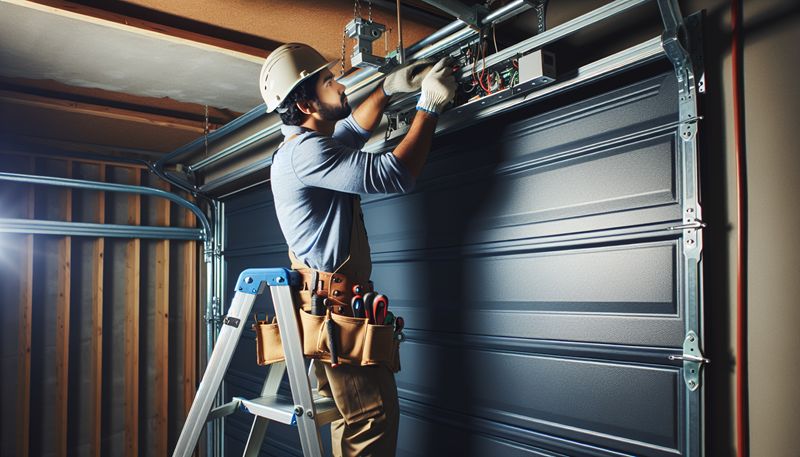
A small garage-door issue can become a big California problem—fast
It’s 7:18 a.m. You’re packed for school drop-off, coffee cooling, you tap the remote—silence. The wall button jolts the door an inch, then it shudders and stops. We get calls like this every week. Across the U.S., more than 20,000 people land in the ER (emergency room) each year from garage‑door incidents. In California, PSPS (Public Safety Power Shutoff) outages, salty coastal air, and inland heat pile on, stressing springs, sensors, and openers right when you need them most.
Now picture the opposite morning: one tap, a smooth lift, barely a whisper. The photo eyes (the small safety sensors near the floor) are clean and aligned, so no random reversals. During a wildfire-season outage, the opener’s backup battery keeps you moving. Dust film and heat glare can fool sensors, and hot tracks can bind rollers—but with the right tune, lube, and seals, we make the door behave predictably. That’s safety and convenience.
So why do tiny hiccups snowball faster here than in other states? California’s mix of microclimates, seismic shake, wildfire smoke, and PSPS rules, plus safety codes like SB 969 (battery‑backup requirement) and UL 325 (sensor standards), all raise the stakes. In a minute, we’ll break down how climate, codes, and local infrastructure reshape garage‑door care.
California conditions raise the stakes for garage door repair
So what does that breakdown look like in real life? Along the coast (San Diego, SF), salty air eats hardware fast. Inland (Sacramento, Inland Empire), 100°F+ heat bakes seals and stresses motors. Statewide seismic movement loosens fasteners over time. Central Valley dust grinds into rollers and tracks. And frequent outages force openers and batteries to work harder. Net effect: accelerated wear on springs, cables, rollers, and openers—everything that keeps your door safe and smooth.
You’ll hear it first: a sudden screech in the morning fog, then a midday groan when the driveway hits 110°F. That’s balance drifting and rollers drying out. Sensors blink for no reason? Often it’s dust film or sun glare on the photo eyes (the small safety sensors). These stressors mean California homes benefit from shorter maintenance intervals—think quarterly quick service near the coast and biannual inland—so small noises don’t turn into stuck doors.
California adds rules to keep you safe. UL 325 (the national auto‑reverse safety standard) means working sensors and proper force settings. SB 969 (California’s battery‑backup law, post‑2019) requires new/replacement openers to run during outages. Some areas also consider wind/seismic anchoring. For you, that means: test reversals, keep sensors aligned, choose a compliant battery‑backup opener, and expect occasional permitting on new doors—no law degree needed, just good guidance.
What you risk when you delay garage door repair in California
An unbalanced door drifts or slams, a fatigued torsion spring loses lift, frayed cables threaten to snap, and misaligned sensors cause random reversals. Real life? A door slams shut on the bumper, your car is trapped during a PSPS (Public Safety Power Shutoff), or a half‑closed door becomes an easy entry point. Small issues escalate quickly when you wait.
Heat softens lubricants and expands metal, so a faint rattle in June can become a seized roller by August. Salt air turns a tiny spot of rust into pitted hinges within months. Even mild quakes nudge tracks and brackets, compounding misalignment. What started as an occasional squeal can snowball into a broken spring, off‑track door, or opener failure that strands you at the worst moment.
Springs and cables hold serious stored energy—when they fail, parts can whip or doors can free‑fall. Mis‑set opener force (too strong) can crush instead of reversing. With kids and pets around, stakes rise fast. Quakes can shift tracks and sensors, creating hidden hazards until the next open/close cycle exposes them.
Security takes a hit too. A door that won’t close fully or a weak lock bar invites quick grabs—especially in Los Angeles and the Bay Area where garages often store bikes, tools, and packages. Thieves look for hesitation and half‑closed doors. Don’t give them the opening.
Buyers notice noisy, jerky doors. Inspectors do too. Deferred maintenance shows up in disclosures, curb appeal, and appraisal notes, which can stall negotiations. A smooth, quiet, compliant door reads as “well‑kept home,” helping you avoid price chips tied to fix‑it credits.
High‑tension springs and lift cables are never DIY. We handle garage door spring replacement and repair California with matched parts, proper torque, and full safety testing—so you don’t risk injury or repeat failures.
Delay costs more here: the California cost-and-risk curve
Here’s a quick side‑by‑side showing how early fixes beat emergencies under California’s salt, heat, and outage reality. Numbers are illustrative and vary by door size, type, and hardware.
| Issue | Act Now (Typical) | Ignore/Delay Risk | California Factor | Time Lost |
|---|---|---|---|---|
| Squealing rollers | Lubricate and adjust tracks/hinges | Track wear increases; door binds or jumps | Dust and summer heat amplify friction | Hours |
| Unbalanced door | Balance and full tune-up | Spring snaps; opener overworks and fails | Earthquake shifts worsen misalignment | Days |
| Frayed lift cable | Professional cable replacement | Door off track; possible property damage | Coastal corrosion accelerates fray | Days |
| Weak torsion spring | Replace matched torsion springs | Sudden failure; heavy door slams | Temperature swings fatigue metal faster | Days |
| Aging opener | Upgrade with battery‑backup model | Locked out during outage | PSPS and wildfire outages common | Hours |
7 signs your California garage door needs attention now
When the window to failure is measured in hours, small noises matter. Use this fast, California‑tuned checklist to catch issues early and decide when to stop and call us.
- Bang or snap: sudden loud noise suggests spring failure—don’t operate.
- Uneven travel: door tilts or drifts in the opening; minor quakes often worsen misalignment.
- Slow/open then reverse: sensor misalignment or wrong opener force—address now to restore safe reversal.
- Frayed or rusty cables: coastal salt air and humidity accelerate wear—schedule replacement before a snap.
- Grinding/squealing: dry rollers or dirty tracks; Central Valley dust packs in and increases friction.
- Vibration/shudder: loose hinges, brackets, or track fasteners—tighten carefully to prevent a derail.
- Opener struggles during outages: missing or dead battery backup—risk during Public Safety Power Shutoffs (PSPS).
Your blueprint: professional inspection, tune-up, and targeted repair
If your opener struggles during an outage—especially PSPS (Public Safety Power Shutoff) events—we bring a California‑tuned plan that restores safety, performance, and code compliance in one visit. We check, fix, and document what matters, from sensors to springs. Most visits take 60–90 minutes.
Here’s how a pro service call with Go Pro Garage runs, step by step, so you know exactly what we’ll inspect, tune, and repair before we leave.
Step 1: Safety check: test photo-eyes, auto-reverse, and force limits per UL 325 (national auto‑reverse safety standard).
Step 2: Balance & lift: disconnect opener; test door balance; adjust spring torque to spec.
Step 3: Hardware & tracks: tighten fasteners; true tracks; replace worn rollers/hinges; correct hinge gauge as needed.
Step 4: Cables & drums: inspect for fray/rust; replace in matched pairs as needed.
Step 5: Opener systems: evaluate belt/chain, travel limits, force, and noise/vibration; add isolation if needed.
Step 6: Weather & seals: replace bottom/top/side seals; improve energy, smoke, and pest control; UV‑resistant options.
Step 7: Lube & test cycle: apply climate‑appropriate lubricant; run multiple open/close cycles; verify smooth, quiet operation.
Prefer zero surprises? Enroll in our seasonal plan and we’ll track batteries, seals, and balance for you—start with our residential garage door maintenance services California and pick a cadence that fits your coast, valley, or mountain home.
Modernize where it counts: battery‑backup opener, quiet belt‑drive isolation, and smart alerts that flag sensor faults and weak batteries. In California power outages and heat waves, these keep you moving, cut noise 30–50%, and boost security. Stuck now? We’ll secure the door first, then upgrade later.
Door stuck, car trapped, or spring snapped? Here’s what to do now
If you’re stuck now, we secure first—here’s how to stay safe until we arrive. Stop operating the door. Keep kids, pets, and cars clear. If the door is fully closed, you may pull the red manual release and open gently by hand; if it’s stuck open or a spring snapped, don’t. During wildfire smoke or PSPS (Public Safety Power Shutoff) outages, avoid leaving it open. Call or text us—our on‑call techs run 24/7 across California.
Do not try to lift a door with a broken spring—it can weigh 150–300 pounds. Don’t bend tracks, reset rollers, or change opener force/travel settings; that hides hazards and risks injury. If the door is crooked or off track, leave it as is and keep the area blocked off. Quakes and aftershocks can shift tracks and photo eyes (the floor‑level safety sensors), so we’ll re‑align and test everything before you operate again.
Need help now? Get same‑day help with our emergency garage door repair services California—text or call and we’ll dispatch a nearby tech.
How timely repair pays off: quick California stories
We just said we’d dispatch fast—here’s what that looks like on California driveways. Three quick, neighborhood snapshots with real numbers so you can see the difference: lower noise, smoother lifts, and outage‑proof access that meets state safety rules.
- San Diego (coastal corrosion): Replaced rusted steel rollers with sealed‑bearing nylon and installed UV‑resistant bottom and side seals; garage noise fell 60%, and the tighter seal cuts salt‑air intrusion that started the rust.
- Sacramento (heat + outages): Paired matched torsion springs with a quiet belt‑drive opener and battery backup; after force reset and balance, lifts were smooth. During two PSPS (Public Safety Power Shutoff) nights, the door worked normally—no stalls or lockouts.
- San Jose (seismic vibration): After small quakes, the door kept reversing for no reason. We trued tracks, re‑fastened brackets, and recalibrated photo eyes; nuisance reversals dropped to zero over 30 days, with smoother, centered travel.
DIY vs. pro: what you can do (and what to leave to experts)
You just saw smoother, centered travel is possible. To keep it that way, do these safe checks—and leave high‑risk, code‑sensitive work to us; a two‑minute sensor wipe alone can stop random reversals.
- Test safety reversal monthly: Place a 2×4 and confirm the door reverses per instructions.
- Clean photo-eyes: Wipe both lenses and clear cobwebs or dust.
- Lubricate hinges/rollers (non-plastic): Use garage-rated lube; avoid WD‑40 (it’s a solvent).
- Inspect weatherstripping: Replace cracked bottom seal if your door uses snap‑in style.
Now, the do‑not‑DIY list: these involve stored spring energy, door weight, and UL 325 (auto‑reverse safety standard) settings—let us handle them to protect you and your warranty.
- Spring replacement: High tension can cause severe injury—always pro‑handled.
- Cable/drum service: Door weight and balance errors can drop doors and damage property.
- Track straightening: Improper alignment can derail the door and bend sections.
- Opener force/limit set‑up: Prevent crush hazards; ensure UL 325 compliance after full safety tests.
Battery backups, UL 325, and smarter openers for California homes
Since we just called out UL 325 (the national auto‑reverse safety standard), what does that mean for you in California? Start with SB 969 (state law requiring battery‑backup on new or replacement openers sold/installed after 2019). During PSPS (Public Safety Power Shutoff) and wildfire seasons, that backup keeps you from being locked out, while UL 325 keeps the door from crushing or trapping. Translation: your door should still open without power and still reverse the instant sensors see a problem.
On every visit, we verify compliance in plain English. We run the 2×4 reversal test, align the photo eyes (the floor‑level sensors), set force/travel correctly, and test the backup battery under load. If your opener is smart‑enabled, we turn on alerts so you get a ping when the door is left open or the battery is low. End result: safer reversals, fewer false stops, and a door that works even when the grid doesn’t. Next, let’s map seasonal care.
Ready to upgrade or fix spotty connectivity and safety? Book our garage door opener installation and repair California—we’ll add battery backup, enable smart alerts, and dial in UL 325 settings.
Your California garage door maintenance calendar
Since we just enabled battery backup and smart alerts, let’s keep them working with a simple, season‑by‑season plan tailored for coastal, inland, and mountain homes. Follow this calendar; next we’ll decide repair vs. replace.
| Season | Key Tasks | California Tip |
|---|---|---|
| Spring | Balance check; lube hinges/rollers; run UL 325 safety reversal test. | Prep for quake season: tighten track/bracket fasteners; re‑level sensors after small shakes. |
| Summer | Inspect and replace brittle seals; clean photo eyes; add shade to opener head. | Inland heat: prevent opener overheat; ventilate garage; check sensor glare shields. |
| Fall | Inspect cables/springs; test battery backup; confirm manual release works smoothly. | Wildfire/PSPS readiness: practice manual release; seal gaps to reduce smoke intrusion. |
| Winter | Replace cracked bottom seal; clean tracks; re‑lube rollers and hinges. | Coastal storms: rinse salt; check hardware for corrosion after heavy rains. |
Repair vs. replace: how to decide in California
After coastal storms have you rinsing salt again, you might wonder if a repair still makes sense. Replace when damage is structural, failures repeat, insulation is poor, the opener lacks modern safety, or you want a major curb‑appeal upgrade. We’ll price both paths, side by side.
If the door is beyond economical repair, explore our garage door replacement services—we’ll match insulation, style, and wind rating, and handle permits. Expect clear options, timelines, and warranties.
Building new or remodeling? Choose code‑compliant hardware—battery‑backup openers and UL 325 (auto‑reverse standard)—and lean on our garage door installation services for sizing, permits, and HOA coordination. Next up: how to choose a California pro.
Choosing the right California garage door pro: a quick checklist
You’re ready to pick a pro—so as promised, here’s our California‑tuned vetting checklist. Use it for your home or HOA; we’ll cover commercial doors right after this.
- Licensed & insured: Verify active CSLB (Contractors State License Board) license, liability, and workers’ comp—proof in writing.
- Local reviews: Look for city‑specific feedback in LA (Los Angeles), San Diego, Bay Area, and Sacramento.
- Stocked trucks: Ask if they carry springs, rollers, cables, and openers for same‑day repairs.
- Warranties: Get labor and parts coverage, length, and exclusions in a written estimate.
- Battery-backup expertise: Confirm SB 969 (California battery‑backup law) compliance and battery health testing on installation and service.
- Safety-first protocol: Require UL 325 (auto‑reverse safety standard) tests and photo‑eye alignment on every visit.
Own a storefront or warehouse in California?
🏢 Commercial Support
That same safety-first checklist extends to your business. We service roll‑ups, fire‑rated doors, and docks with 24/7 response and preventive maintenance. Explore our commercial garage door repair services California to schedule a site walk—fast estimates, code-ready fixes, and stocked trucks that keep bays moving.
5 garage door myths (and the truth) for California homeowners
Those stocked trucks that keep bays moving? At home, myths slow you down and cost money. Let’s bust the big five so you make safer choices, pass code, and avoid repeat repairs.
- Myth: WD‑40 is a good lubricant — Correction: Use garage‑rated silicone or white lithium; WD‑40 is a solvent that strips lube.
- Myth: Springs last forever — Correction: They’re rated by cycles; standard sets often around 10,000, heavy-use homes may need higher-cycle upgrades.
- Myth: Battery backup is optional — Correction: New or replaced openers in California must include it (SB 969), so you’re outage-ready.
- Myth: Reversing once means sensors are fine — Correction: Test monthly with a 2×4, clean lenses, and re‑align to UL 325 standards.
- Myth: Any handyman can fix it — Correction: High‑tension springs and UL 325 (auto‑reverse) checks demand trained pros and proper tools.
California homeowners: book your safety and performance check today
Trained pros with the right tools—that’s us, and it’s how your door stays compliant with UL 325 (national auto‑reverse safety) and SB 969 (California’s battery‑backup law). Book a free 20‑point safety and performance check and get safer operation, outage‑ready access, and a quieter door. We offer same‑ or next‑day windows across major California metros, and most tune‑ups take 60–90 minutes. You’ll see transparent, written pricing before work starts and clear warranty options after—no surprises.
Wherever you are—LA, San Diego, the Bay Area, or Sacramento—we’ve got nearby techs on call. Our team is CSLB‑licensed (California Contractors State License Board), insured for liability and workers’ comp, and background‑checked. We arrive with stocked trucks, shoe covers, and photo/ETA texts so you know exactly who’s coming and when. Need urgent help? We handle 24/7 emergencies, secure the door first, then complete repairs fast. You get tidy work, respectful service, and documentation you can keep with your home records.Schedule My Garage Door Check — Same-day in many CA cities
About the author
👨🔧 Go Pro Garage Expert
Same‑day in many CA cities? That’s our everyday playbook. I’m Alex Martinez, Senior Technician at Go Pro Garage. For 12+ years, I’ve kept California doors safe, quiet, and code‑smart across the coast, valleys, and Sierra. I’m factory‑trained on LiftMaster, Genie, and Chamberlain, and I verify UL 325 (auto‑reverse safety standard) and SB 969 (battery‑backup law) on every job. I’ve completed 2,500+ service calls, from corroded coastal hardware to PSPS (Public Safety Power Shutoff) lockouts. You’ll get clear options, before/after photos, and tidy work—so your door just works.
 French
  English