

Benefits of Garage Door Maintenance in California
When the Door Won’t Budge Before the Bay Area Commute
It’s 7:12 a.m. in San Jose, coffee in hand, calendar stacked. You tap the remote—nothing. The garage light blinks, the door won’t move, and your 8:00 a.m. stand-up and preschool drop-off are now in jeopardy. We see mornings like this every week, and most are preventable with a California-specific maintenance routine that keeps sensors clean after fog, hardware tight after quakes, and the opener ready for outages.
Pasadena, school drop-off at 7:45. The door groans, stops half-open, and the opener blinks like it’s thinking about it while your third-grader asks if you’ll miss pickup again. Last month’s PSPS (Public Safety Power Shutoff, a planned outage during fire weather) drained the backup you never tested. A five-minute seasonal check would’ve caught it—and it’s the same checklist we use. Want the quick win? Grab our free California maintenance calendar—then see why our microclimates make upkeep essential.
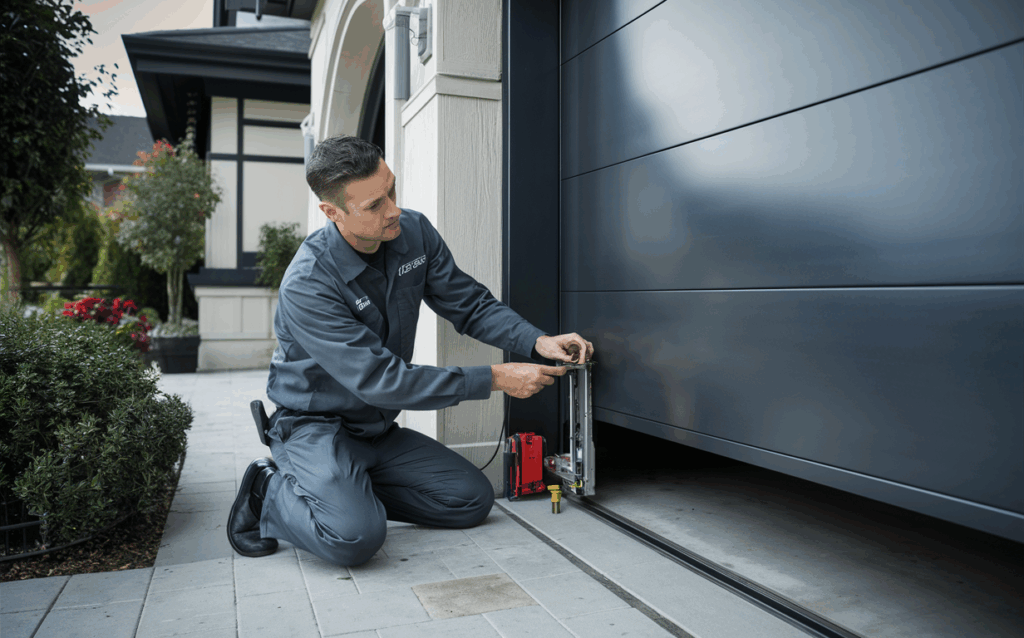
Why California Makes Garage Door Maintenance Non‑Negotiable
So why do our microclimates make upkeep essential? Coastal salt air and fog attack steel; valley heat and dust dry seals; mountain mornings freeze weatherstripping. We open/close doors 6–12 times a day in car-centric California, so parts rack up cycles fast. Add curb appeal expectations and safety in outages, and small issues turn big quickly. California now requires battery‑backup openers after wildfire evacuations (verify statute)—so readiness is part of maintenance, not optional.
In plain English: California’s environment is harder on doors, and our laws expect you to keep them safe. Salt (sodium chloride, the same stuff on ocean mist) accelerates rust. UV and heat cook lubricants. High winds shake hardware loose. And new openers must include a battery backup (SB‑969, 2018—verify current statute citation) so you can exit during Public Safety Power Shutoffs (PSPS, planned fire‑weather outages). Preventive care is how you stay compliant, quiet, and safe.
Here’s the short version of why California garage doors need special attention—then we’ll show you the plan.
- High cycle counts from daily commuting culture
- Salt air and coastal fog accelerating corrosion
- Heat, dust, and wildfire ash stressing components
- State safety expectations (battery-backup openers)
What Skipping Maintenance Really Costs in California
Skip tune-ups and the weak link shows up when you need the door most. Worn springs (the counterbalance coils that lift the door) snap, frayed cables unravel, and misaligned tracks pinch a panel until the opener stalls. Dirty photo‑eyes (the safety sensors near the floor) misread fog or sun glare and trap a car inside. During PSPS (Public Safety Power Shutoffs, planned fire‑weather outages) or a Sierra snow morning, that can strand your family and block emergency egress. Then comes the emergency bill.
On busy Bay Area schedules, a door cycles thousands of times a year. A little grinding becomes heat, heat warps rollers, and the opener cranks harder until gears wear out. Now you’re replacing panels and a motor instead of tightening hardware and lubricating hinges. Add security risk: a door that won’t close invites late‑night garage theft. All of it was preventable with a 30–45 minute maintenance visit. The longer you wait, the more parts fail together—and the invoice climbs.
So what does that actually cost in California? Here are the hidden hits we help homeowners avoid.
- After-hours emergency service premiums
- Collateral damage to panels/opener from misalignment
- Increased burglary risk if doors won’t close
- Car damage from free-falling doors or broken springs
- Lost work hours and missed appointments
Why Small Issues Snowball Faster Here
Salt air pits steel like tiny cavities; once the surface is rough, moisture sticks and rust accelerates. Inland heat thins and bakes lubricants, so metal runs dry by August. Ash and grit from wildfire season ride the breeze, fouling rollers and photo‑eyes, while Santa Ana winds shake fasteners loose. Miss a tune‑up and the door gets louder—some HOAs (homeowners associations) even fine for nuisance noise. After big storms, parts go on backorder, and lead times jump from two days to two weeks.
Remember that stalled opener in the morning rush? Add heat‑soaked electronics and sun‑blinded sensors, and you’ve got intermittent failures that are hard to trace until they become total shutdowns. Every extra pound of friction forces the motor to work harder, which shortens lifespan and raises the risk of a door slamming shut. That’s a safety issue, not just convenience. Routine adjustments and fresh lubricant break this cycle early, before you’re stuck during a PSPS evening or a January storm.
Spot these early and you’ll save hundreds and avoid downtime. We flag them on every service call—do a quick self-check when you notice any of the following.
- Door hesitates or jerks mid-travel
- Opener strains, vibrates, or runs louder
- Photo-eye sensor misfires in bright sun
- Weatherstrip cracked, daylight visible at bottom
What Our California Tune-Up Covers
Our job is to restore safe balance, reduce friction, calibrate limits and force, verify every safety system, and extend your door’s lifespan. We do it with certified technicians who follow strict spring and high‑tension protocols—no guesswork, no shortcuts. You get a door that opens smoothly, stops safely, and stays quiet through heat, fog, and wind.
Here’s the pro checklist we run in California homes—thorough inspections, precise adjustments, targeted lubrication, careful cleaning, and multiple safety tests.
- Torsion/extension spring inspection and balance test
- Cable fray check and drum/anchor integrity
- Roller condition, axle wear, and smooth travel
- Track alignment, fastener torque, and plumb/square
- Hinge pins/bolts wear and panel integrity
- Opener force/limit recalibration and chain/belt tension
- Photo-eye alignment, obstruction tests, and sun-shielding
- Weatherseal/threshold condition and energy loss points
- Lubrication with climate-appropriate products
- Battery-backup test and firmware/smart features update
Not sure which approach fits your household? This quick comparison shows the tradeoffs between waiting for breakdowns, doing DIY-only upkeep, and joining a yearly professional plan.
| Approach | 5-Year Cost (est.) | Downtime | Safety Risk | Noise/Efficiency | Best For |
|---|---|---|---|---|---|
| Reactive repairs | Highest (multiple emergencies + collateral damage) | Unpredictable, often worst-time failures | Elevated risk until repaired | Loud, inefficient operation persists | Only for rare-use doors |
| DIY-only upkeep | Low to moderate (tools/time) | Occasional disruptions from missed issues | Moderate due to missed high-tension items | Some improvement, inconsistent | Handy owners with light use |
| Pro annual plan | Predictable, lowest total cost | Scheduled, brief | Lowest—issues caught early | Quietest, most efficient | Busy California households |
A Seasonal Plan for Busy California Households
Busy schedule? Here’s your California garage door maintenance checklist—homeowner tasks only, no high‑tension spring work. Use it in 15–20 minutes per season, then book our California Tune‑Up for the pro items—usually same‑week.
- Spring: Clean tracks and rollers (dry wipe), check weatherstripping, wash the door, test photo-eyes, and schedule your annual pro tune‑up before heat waves.
- Summer: Lubricate hinges and metal rollers with heat‑stable white lithium, add silicone to seals, shade sensors, and watch for thermal expansion causing track rub or misalignment.
- Fall: Clear wildfire ash and debris, re‑check balance only (no spring adjustments), replace cracked bottom seals, and seal gaps before the first heavy rains.
- Winter: Test opener battery‑backup health monthly, clear condensation or ice in mountain areas, and practice the manual release so everyone can lift the door safely during outages.
💡 Pro Tip
SoCal: Santa Ana winds drive sand into tracks—vacuum and check fasteners after gusty days. NorCal coast: use anti‑corrosion lube on hardware and spot‑treat rust early. Next, see real California results from this routine.
California Tune-Up Results, At A Glance
As promised, here are real California results from that routine—condensed, anonymized snapshots from our jobs. City, issue, our fix, and the payoff: downtime avoided, failures prevented, or dollars saved. Once function is dialed, we’ll show how maintenance supports curb appeal in classic California styles.
- San Jose: Recalibrated smart opener limits and balanced torsion springs; prevented a 7:30 a.m. jam. Saved a $600 emergency call and 2 hours of commute delay.
- Sacramento: Replaced frayed lift cables and realigned tracks during annual check; door ran 9–12 dB quieter and removed risk of cable snap near vehicles and kids.
- San Diego: Stainless fasteners, anti-corrosion coating, and rinse schedule extended hardware life 2+ years; deferred a $350–$500 hinge/roller replacement and kept noise down 60%.
Victorian Homes in Preservation Districts: Curb Appeal That Lasts
After cutting corrosion and 60% of the noise in San Diego, that same hush-and-protection is crucial on San Francisco Painted Ladies and Old Sacramento blocks. We keep wood overlays from swelling with maintained paint and sealed edges, realign carriage‑style panels so shadow lines stay crisp, and swap rust‑prone screws for stainless. Decorative hardware gets quiet lube; window lites (small glass panes) get streak‑free care. Inside, we hide belt‑drive openers and discreet smart tech to preserve the facade. Explore our Garage Doors for Victorian-Style Homes guidance.
Quiet, Balanced Craftsman Doors in Pasadena and Berkeley
From Victorian facades, we move to Craftsman porches in Pasadena and Berkeley. Stained wood needs UV-resistant topcoats and a quick seasonal wipe; we seal edges to prevent warping. We keep carriage-style strap hinges and handles clean and lubricated, and polish window lites without streaks. Our tune-ups balance heavy wood slabs, dial opener force, and quiet belt drives so shared walls stay peaceful. Explore our Garage Doors for Craftsman-Style Homes guide for style-safe upgrades. Next, we’ll keep those clean-line modern and farmhouse doors flawless.
Modern Farmhouse and Contemporary: Quiet, Flawless Doors
About those clean-line modern and farmhouse doors—keeping them flawless starts with smooth, silent travel. For full-view glass, we use non‑abrasive cleaner and microfiber, then check glazing seals (rubber that cushions glass) so panes don’t rattle in wind. Flush panels and minimalist black hardware stay crisp when you avoid harsh cleaners, tighten concealed fasteners, and lube hinges/nylon rollers—most homes see an 8–12 dB noise drop. We also inspect bottom gaskets for tight, quiet closes. For style picks and specs, see modern farmhouse guide. Next up: smart, safe upgrades.
Wi‑Fi Control, Cameras, and Battery‑Backup Safety for California Homes
You wanted smart, safe upgrades—so let’s add control and resilience. Wi‑Fi openers let you check and close the door from Tahoe weekends, school pickups, or delivery windows, and record activity. During PSPS (Public Safety Power Shutoffs—planned fire‑weather outages), battery backup keeps the door moving and keeps you compliant. If you’re comparing models, our Wi‑Fi‑enabled garage door openers guide breaks down apps, cameras, and geofencing in plain English.
Here are the practical wins our California families use daily—built into today’s smart openers. Then, watch for early warning signals—we’ll show you the big ones next.
- Remote status checks and alerts on wildfire/PSPS days
- Guest access for sitters and contractors without sharing remotes
- In-app maintenance reminders based on cycle counts
- Package delivery coordination into garages
- Battery-backup compliance and safer egress
Warning Signs and Quick Checks
That battery‑backed, safer egress only works if you catch issues early. Blinking opener lights, a door that reverses, or new grinding noises are diagnostic clues—not random annoyances. If your light is flashing, our opener flashing guide translates blink patterns into likely causes and simple fixes.
Watch for these signals, try the safe checks, and call us if they persist—next we’ll show what’s DIY vs pro.
- Sign: Loud grinding: Inspect rollers and tracks for debris, wipe clean, then lubricate metal rollers/hinges with white‑lithium; avoid oil on tracks.
- Sign: Door drifts open/closed: Perform a balance test; if it won’t hold halfway, stop and book a pro spring evaluation.
- Sign: Opener light blinks: Clean and align photo‑eyes (safety sensors), remove obstructions, and check blink codes using the opener flashing guide above.
- Sign: Uneven travel: Check tracks are vertical with a level, tighten loose brackets and lag screws; stop if tracks are bent.
- Sign: Daylight under door: Replace the bottom seal/threshold to improve energy efficiency and keep out water, smoke, and pests.
DIY vs. Pro: Your Safe Line for Garage Doors
If you’re seeing daylight under the door, yes—you can handle that bottom seal and a quick clean after dust or ash. But springs and lift cables are high‑tension parts that can whip or crush when mishandled. That’s pro territory. Here’s how we draw the line so you stay safe—and how pro work protects warranties, insurance claims, and California compliance.
Start here—five quick, do‑it‑yourself (DIY) tasks you can knock out in 15 minutes.
- Wipe tracks (no bending), clear debris
- Test photo-eyes monthly with obstruction
- Inspect/weatherstrip and replace bottom seal
- Tighten accessible hinge/track fasteners
- Lubricate rollers/hinges with proper product
And these are pro-only. They involve high tension or heavy panels, specialized tools, and documentation that helps with warranties, insurance, and code compliance in California.
- Spring replacement or tensioning
- Cable/drum re-stringing and anchoring
- Opener force/limit recalibration under load
- Panel realignment on heavy wood/glass doors
⚠️ Safety Warning
Never loosen set screws on springs or drums without proper training/tools.
Protect Warranties, Claims, and California Compliance
And there’s another reason to leave those set screws alone: your warranty and insurance. Manufacturers often require documented maintenance—dates, lubricants used, safety tests—to keep parts covered for 1–5 years. After a storm, insurers ask for proof you maintained springs, cables, and sensors; clean records shorten claim reviews from weeks to days. In California, new opener installs must include battery backup (SB‑969, 2018—battery that runs during outages). We’re not giving legal advice; we document everything and verify permitting and code notes with your local AHJ (Authority Having Jurisdiction).
What does that look like for you in practice? If we replace an opener, some cities want an electrical permit; full door swaps can trigger wind-load or seismic anchoring checks. We confirm requirements with the AHJ before work, then leave you with invoices, photos, and settings logs. Example: a wildfire smoke claim in Santa Rosa cleared in 6 days because the homeowner had dated maintenance and a battery‑backup test on file. HOAs (homeowners associations) also care—quiet limits and approved finishes—our reports help. Got questions? Our FAQs are next.
🗂️ Compliance Tip
Keep dated invoices, technician notes, and before/after photos in one folder; they speed insurance claims, support warranties, and boost resale confidence.
California Garage Door FAQs
Since you’re keeping invoices, notes, and photos together, here are the quick answers Californians ask next. City rules and HOA (homeowners association) guidelines vary; we’ll confirm specifics for your address during booking.
- How often in California?: Book a professional tune-up once a year or about every 10,000 cycles; in between, do seasonal homeowner checks for sensor cleaning, lubrication, weatherstripping, and tightening accessible hardware.
- What does a tune-up include?: Springs and cables inspection, rollers and hinges check, track alignment and fastener torque, photo-eye sensor tests, climate-appropriate lubrication, opener force/limit calibration, and seal/weatherstrip assessment with battery-backup verification.
- What’s the cost range?: California tune-ups start at $149–$229 per door; parts or repairs are separate. Pricing varies by door size, condition, number of doors, and travel distance.
- Is battery backup required?: Yes—new opener installations in California must include battery backup; verify local codes and HOA rules. It lets you open/close during outages and PSPS (planned fire-weather shutoffs), improving safety and compliance.
- Do you service my city?: Yes—San Francisco Bay Area (Peninsula, East/South/North Bay), Sacramento region, Los Angeles/Orange County, Inland Empire, and San Diego. Same-day or next-day windows in most neighborhoods.
Book Your California Tune-Up Today
You just saw we offer same-day or next-day windows. Ready to lock yours in? We hold slots across the Bay Area, Sacramento, LA/OC, San Diego, and Fresno. Prefer a quick tap-to-call or text, or want to book online in 60 seconds? Your choice—either way, a licensed tech confirms your time and arrives with a stocked van.Schedule Your Tune-Up
📞 Contact Options
Call or text us, or use the quick form. Licensed, insured techs. Stocked vans solve most issues in one visit.
 English
  French