

Commercial Gate Repair: A Complete Guide for California Business Owners
From motor malfunctions and off-track rollers to emergency breakdowns and security upgrades, here’s everything you need to know about keeping your commercial gate safe, functional, and compliant.
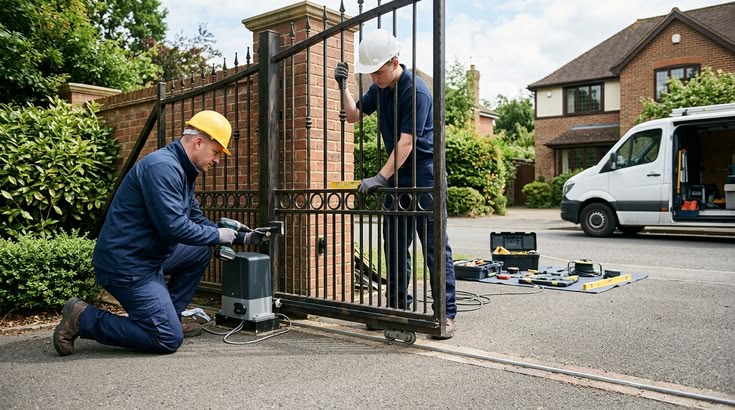
Why Your Commercial Gate Matters More Than You Think
Your commercial gate is the first line of defense for your business property. It controls who enters and exits, protects expensive inventory and equipment, and sends a clear message about the professionalism of your operation. When that gate stops working, everything from daily operations to employee safety gets disrupted.
For California businesses specifically, a malfunctioning gate isn’t just an inconvenience. It’s a liability. Unauthorized access, delayed deliveries, trapped vehicles, and workplace safety violations can all result from a gate that’s been neglected or poorly maintained. Whether you’re running a warehouse in Sacramento, a retail complex in the Bay Area, or a gated office park in Southern California, your gate needs to work every single time.
At Go Pro Garage Door Repair, we’ve spent 40+ years working on gate repair and commercial door systems across Northern California. This guide draws on that hands-on experience to walk you through the most common commercial gate problems, how to prevent them, and when you need professional help fast.
California’s Climate and Environmental Challenges for Commercial Gates
California’s diverse climate creates unique stress on commercial gate systems that business owners in other states don’t face. Understanding these challenges helps you anticipate problems and invest in the right preventive care.
Coastal Corrosion
Salt air along the coast, from San Francisco to Monterey and beyond, accelerates corrosion on metal gate components. Steel tracks, hinges, chains, and fasteners all deteriorate faster near the ocean. Even stainless steel hardware needs periodic inspection in these environments. If your business sits within five miles of the coast, expect to service your gate more frequently.
Inland Heat and UV Exposure
In the Sacramento Valley, Central Valley, and inland Southern California, summer temperatures routinely exceed 100°F. That kind of heat expands metal tracks, dries out lubricants, and weakens plastic components like sensor housings and remote receivers. UV radiation breaks down weatherstripping and rubber seals, leaving gaps that invite dust, pests, and moisture.
Wind and Seismic Activity
Santa Ana winds in Southern California can gust above 60 mph, pushing gate panels off-track and loosening mounting hardware. Even small earthquakes, which are common throughout the state, can shift gate posts and misalign tracks by fractions of an inch. That small shift is enough to cause binding, scraping, and premature wear on rollers and wheels.
Wildfire Smoke and Ash
During fire season, airborne ash and soot settle on gate tracks, coat sensor lenses, and work their way into motor housings. This gritty buildup accelerates wear on moving parts and can obstruct safety sensors, creating both operational and safety issues.
California Stress Quick Reference
- Coastal zones: Prioritize corrosion-resistant hardware and frequent cleaning
- Inland heat zones: Use high-temperature lubricants and UV-resistant components
- Wind corridors: Reinforce tracks and fasteners; inspect after major wind events
- Seismic areas: Check alignment after any felt earthquake
- Fire-prone areas: Clean sensors and tracks after smoke events; inspect motor housing seals
Common Commercial Gate Problems and Warning Signs
Commercial gates endure significantly more cycles than residential systems. A busy warehouse or gated parking lot might open and close dozens of times daily, and that heavy use, combined with California’s environmental stressors, leads to a predictable set of failures. Here are the issues we encounter most:
- Motor malfunctions: The motor strains, overheats, or stops responding. Often caused by worn gears, electrical faults, or overloaded circuits.
- Damaged or misaligned tracks: Tracks bend, shift, or accumulate debris, causing the gate to bind, scrape, or stop mid-travel.
- Control system failures: Keypads, remotes, access control panels, or wiring develop faults, locking out authorized users or allowing unauthorized entry.
- Misaligned safety sensors: Photo-eyes get bumped, dirty, or shift position, causing the gate to reverse unexpectedly or refuse to close.
- Worn wheels and rollers: Flat spots, cracks, or bearing failures in gate wheels create grinding noises and uneven movement.
- Chain or belt deterioration: Stretched chains, frayed belts, or corroded drive components cause slipping, jerky movement, or complete failure.
- Structural damage: Vehicle impacts, rust, or weather damage compromise the gate’s frame, panels, or mounting posts.
Noticing any of these signs? Don’t wait. Small problems escalate quickly with commercial gates because of the heavy loads and constant cycling. A grinding noise this week can become an off-track emergency next week. If your business also has garage doors that need repair, it makes sense to address both systems in one service visit.
Addressing Motor and Electrical Issues
The motor is the heart of any automatic commercial gate. When it fails, your entire operation feels it. Here’s what to watch for and how professional diagnosis works.
Signs Your Gate Motor Is Failing
- The gate opens or closes noticeably slower than usual
- You hear humming, buzzing, or clicking without gate movement
- The motor housing feels hot to the touch
- The gate stops mid-cycle or reverses without an obstruction
- Circuit breakers trip when the gate operates
- Burning smell comes from the motor area
What Causes Motor Failure?
Most commercial gate motors fail because of excessive strain. When tracks are dirty, wheels are worn, or the gate itself is out of balance, the motor works harder every cycle. Over time, that extra effort burns out capacitors, wears gears, and overheats windings. Electrical issues, including corroded wiring, loose connections, and power surges, compound the problem.
Go Pro technicians start every motor repair job with a full diagnostic. We test voltage, check amperage draw under load, inspect wiring connections, and evaluate the motor’s interaction with the gate’s mechanical system. Often, fixing the root cause (a misaligned track or worn roller) extends the motor’s life without needing a full replacement.
Motor Replacement Considerations
If the motor does need replacing, we recommend sizing the new unit to your gate’s actual weight and cycle count, not just matching the old motor. Many commercial properties have added insulation, reinforcement panels, or heavier gate sections over time, and the original motor may have been undersized from the start. A properly matched motor runs cooler, quieter, and lasts longer.
Track and Wheel Maintenance for Commercial Gates
Sliding gates rely entirely on their tracks and wheels for smooth, safe operation. When these components wear out or get neglected, the gate becomes noisy, uneven, and eventually dangerous.
Track Issues to Watch For
- Debris accumulation: Dirt, gravel, leaves, and construction dust collect in ground tracks and guide rails, forcing the gate to push through resistance with every cycle.
- Misalignment: Ground settling, vehicle impacts near gate posts, or seismic shifts move tracks out of position. Even a quarter-inch deviation causes binding.
- Corrosion and pitting: Coastal properties see track surfaces roughen from salt exposure, creating friction that wears wheels faster.
- Bent or damaged sections: Heavy impacts or thermal expansion can warp track sections, creating high spots that catch rollers.
Wheel and Roller Care
Gate wheels take an enormous beating. On a busy property, they may complete thousands of passes per month over the same track surface. Look for flat spots, cracked housings, or bearing noise (a high-pitched whine or rhythmic clicking). Lubricate bearings on the manufacturer’s recommended schedule, and replace wheels in sets to keep the gate balanced.
Our track repair and replacement service covers everything from cleaning and realignment to full track installation. We also handle commercial spring systems that help counterbalance gate weight and reduce strain on tracks and motors.
Ensuring Proper Sensor Alignment and Safety
Safety sensors on commercial gates serve a critical function: preventing the gate from closing on people, vehicles, or objects. When these sensors malfunction, the consequences range from annoying (a gate that won’t close) to dangerous (a gate that doesn’t detect an obstruction).
Common Sensor Problems
- Misalignment: Vibration from gate operation, accidental bumps, or ground settling can shift sensor positions. Even a slight angle change breaks the beam path.
- Dirty lenses: Dust, pollen, spider webs, wildfire ash, and water spots on sensor lenses reduce detection accuracy.
- Sun interference: Direct sunlight hitting a sensor at certain angles can trick it into seeing a false obstruction.
- Wiring issues: Corroded connectors, chewed wires (rodent damage is surprisingly common), and loose terminals cause intermittent failures.
Sensor Maintenance Best Practices
- Clean sensor lenses monthly with a soft, dry cloth. Use glass cleaner for stubborn residue.
- Test sensor function weekly by placing an object in the gate’s path during closing. The gate should stop and reverse immediately.
- Verify sensor indicator lights are solid (not blinking) after cleaning and alignment.
- Inspect wiring quarterly for signs of damage, corrosion, or pest activity.
- After smoke events or storms, clean and retest all sensors before resuming normal operation.
Sensor issues often overlap with opener system problems. If your gate’s sensors are fine but the opener still behaves erratically, the control board or limit switches may need attention.
Rolling and Sliding Gate Maintenance
Different gate types require different care. Here’s a breakdown of what each style needs.
Rolling Gates (Roll-Up / Coiling)
Rolling gates coil around a barrel at the top of the opening. They’re popular in loading docks, storage facilities, and retail storefronts because they don’t require side clearance. Key maintenance tasks include:
- Inspecting and lubricating the curtain slats, bearings, and barrel assembly
- Checking spring tension (these use torsion or counterbalance springs similar to garage door spring systems)
- Cleaning guide channels to prevent binding
- Testing the manual release mechanism for emergency operation
- Verifying that bottom bar and astragal seals are intact
Sliding Gates
Sliding gates travel horizontally along a ground track or overhead rail. They’re the standard choice for perimeter security at warehouses, distribution centers, and gated complexes. These gates need:
- Regular ground track cleaning (the number one cause of sliding gate failures)
- Wheel and roller bearing inspection and lubrication
- Post and foundation checks for settling or leaning
- Chain or rack-and-pinion drive inspection for wear and tension
- Limit switch testing and adjustment
Swing Gates
Swing gates use hydraulic or electromechanical arms and require attention to hinge points, arm connections, and the gate’s balance point. Wind resistance is a major factor for swing gates in California, particularly in areas prone to Santa Ana winds.
Building a Preventive Maintenance Schedule
Reactive repairs cost more than preventive care. Every time. A structured maintenance program catches problems early, extends equipment life, and reduces unexpected downtime. Here’s a practical schedule based on what works for California commercial properties.
| Frequency | Tasks | Who Should Do It |
|---|---|---|
| Weekly | Visual inspection of tracks, sensors, and gate movement. Test auto-reverse safety feature. Clear debris from ground tracks. | On-site staff |
| Monthly | Clean sensor lenses. Lubricate hinges, rollers, and bearings. Check for loose fasteners. Test manual release operation. | On-site staff |
| Quarterly | Full track cleaning and alignment check. Inspect wiring and electrical connections. Test all access control points. Motor performance evaluation. | Professional technician |
| Biannually | Comprehensive system inspection. Spring tension testing. Drive mechanism overhaul (chain/belt). Control panel diagnostics. Security system integration check. | Professional technician |
| After weather events | Post-storm or earthquake alignment check. Sensor cleaning after smoke/ash. Hardware tightening after high winds. | Professional technician |
Our garage door and gate maintenance service includes all of these checks. We provide a detailed written report after every visit, document any concerns with photos, and give you clear options with upfront pricing. No surprises.
Upgrading Your Commercial Gate’s Security Features
A functioning gate that opens for anyone isn’t much better than no gate at all. Modern access control and security systems add real value to your commercial property, and they integrate smoothly with your existing gate infrastructure.
Access Control Options
- Keypad entry systems: Individual codes for employees, vendors, and visitors. Easy to manage and revoke access.
- Card/fob readers: RFID-based access with logging capabilities for tracking entry and exit times.
- Biometric systems: Fingerprint or facial recognition for high-security applications.
- Smartphone-based access: Bluetooth or app-controlled entry for modern convenience and audit trails.
- Intercom and video systems: Verify visitors before granting entry, with video recording for security documentation.
Surveillance Integration
Pairing your gate system with surveillance cameras gives you a complete picture of who enters and exits. Position cameras to capture license plates at vehicle gates and faces at pedestrian gates. Cloud-based recording means you can review footage from anywhere, and motion alerts notify you of after-hours activity.
If you’re also upgrading garage door openers at the same property, we can integrate gate and door access under a single control system, simplifying management and reducing costs.
Commercial Gate Repair vs. Replacement: Making the Right Call
Not every gate problem calls for repair. Sometimes replacement is the smarter investment. Here’s how to evaluate your situation honestly.
When Repair Makes Sense
- The gate is less than 10 years old and structurally sound
- The issue is isolated to one component (motor, sensor, track section, or control board)
- Repair costs are less than 40–50% of replacement cost
- The gate still meets your security and operational requirements
- Parts are readily available from the manufacturer
When Replacement Is the Better Investment
- The gate is 15–20+ years old with recurring problems
- Structural damage is significant (bent frames, cracked welds, major rust)
- Repair costs exceed 50% of a new gate installation
- The gate no longer meets current safety codes or ADA requirements
- You need upgraded security features that can’t retrofit to the existing system
- Parts are discontinued or difficult to source
When it’s time for a new gate, our installation team handles the full project, from engineering and permitting to installation and programming. We also offer a wide range of gate and door options for both residential and commercial properties, including steel and wood designs.
Emergency Commercial Gate Repair: When Every Minute Counts
A gate stuck open at 2 a.m. is a security crisis. A gate stuck closed during peak delivery hours costs real money. Commercial gate emergencies happen, and how quickly they get resolved depends entirely on having the right service partner in place before the crisis hits.
What Qualifies as an Emergency?
- Gate is stuck open and can’t be secured, leaving the property exposed
- Gate is stuck closed and trapping vehicles or blocking access
- A vehicle has struck the gate, creating structural damage and a security gap
- Electrical failure (sparking, burning smell, or exposed wiring)
- Safety sensors have failed completely, creating a crush hazard
- The gate has come off its track and is obstructing the entrance
What to Do While Waiting for Emergency Repair
- Ensure safety first. Keep people and vehicles away from the gate. If it’s partially open, don’t try to force it closed.
- Use the manual release if possible and if you’ve been trained on it. Many commercial gates have a key-operated manual release for emergencies.
- Secure the opening temporarily with barriers, cones, or a security guard if the gate is stuck open.
- Document the situation with photos and notes for insurance and repair purposes.
- Contact your gate repair provider immediately. The sooner the call goes in, the sooner a technician arrives.
Go Pro Garage Door Repair offers 24/7 emergency repair services across Northern California, from Novato to the greater Bay Area and beyond. Our technicians carry common commercial gate parts and tools on every service vehicle, so many emergencies get resolved in a single visit. Call (888) 987-0933 for urgent situations.
Compliance with California Regulations
California has specific requirements for commercial gate installations and operations. Non-compliance can result in fines, liability exposure, and insurance complications. Here are the key requirements every business owner should know:
- UL 325 compliance: All automated gates must meet UL 325 standards for safety, including provisions for entrapment protection devices (photo-eyes, sensing edges, or loops).
- ASTM F2200: Standards for automated vehicular gates, covering design, installation, and performance criteria.
- ADA accessibility: Pedestrian gates must meet Americans with Disabilities Act requirements for width, force, and opening speed.
- Local building codes: California cities may have additional requirements for gate height, setback, fire access, and emergency vehicle clearance.
- SB 969 battery backup: While primarily targeting garage door openers, the principle of battery backup for automated entry points is increasingly recommended for commercial gates in power-shutoff-prone areas.
Our team stays current on all applicable codes and standards. When we install or repair a commercial gate, we ensure everything meets or exceeds current requirements. If your existing gate has compliance gaps, we’ll identify them and give you clear options to bring the system up to standard.
Training Your Staff on Gate Systems
If your property has on-site maintenance or security staff, make sure they understand the basics of your gate system. Trained staff catch problems earlier, respond correctly to emergencies, and reduce unnecessary service calls.
Essential Staff Training Topics
- How to operate the manual release safely
- Basic troubleshooting steps (sensor cleaning, debris removal, restarting the control panel)
- Recognizing warning signs that require professional service
- Emergency procedures for gate-related incidents
- Access control system management (adding/revoking codes, reviewing logs)
- Documentation protocols for maintenance and incidents
We offer brief on-site training for your team as part of our maintenance program services. It takes about 30 minutes and pays for itself the first time a staff member catches a problem before it becomes an emergency.
Frequently Asked Questions About Commercial Gate Repair
How much does commercial gate repair cost in California?
Commercial gate repair costs in California typically range from $150 to $600 for common problems like sensor realignment, track adjustments, or motor servicing. Major repairs, including motor replacements or structural work, can cost $800 to $2,500+, depending on gate type, materials, and labor. At Go Pro Garage Door Repair, we provide free estimates so you know exactly what to expect before any work begins. Costs vary by location and gate system, but we always give transparent, upfront pricing.
Why is my commercial gate not opening or closing properly?
The most common causes include misaligned safety sensors, a failing or overheating motor, debris in the ground track, worn wheels or rollers, and electrical faults in the control panel. In California, extreme heat can cause metal expansion that affects alignment, and power fluctuations during high-demand periods can stress electrical components. Start by checking for visible obstructions and confirming power supply. If the issue persists, contact a professional for motor, sensor, or track-related diagnosis.
How often should commercial gates be serviced?
We recommend professional servicing at least twice per year for most commercial gates. High-traffic properties like warehouses, gated communities, distribution centers, and retail complexes benefit from quarterly inspections. Between professional visits, on-site staff should perform weekly visual checks and monthly cleaning of sensors and tracks. This combination of professional and routine care keeps costs down and reliability up.
When should I replace my commercial gate instead of repairing it?
Consider replacement if repair costs exceed 50% of a new installation, if the gate is over 15–20 years old with recurring failures, if there’s significant structural damage (bent frames, cracked welds, extensive rust), or if it no longer meets current safety codes and access control standards. Frequent breakdowns, discontinued parts, and outdated security features are also strong indicators that replacement will give you better long-term value.