

February 9, 2026 9 min read
Stuck after a loud bang? We explain why California homes wear springs differently—climate, usage, and rules—then move from basics to smart selection, opener calibration, and same-day, code-aware service across the state.
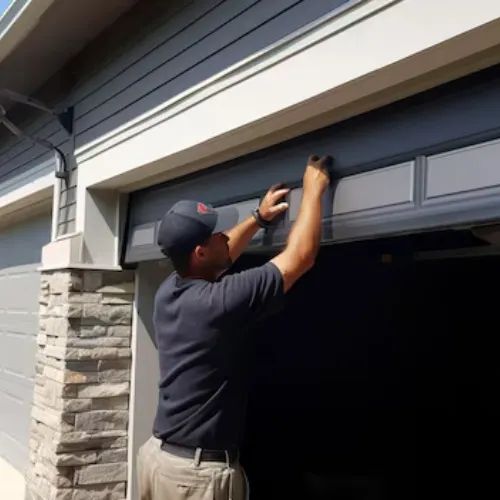
Torsion springs 101 for California: coastal air, heat, seismic
You just read how California conditions change spring wear—here’s what that actually means. Torsion springs are coiled steel that counterbalance the door’s weight so you can lift it safely. On insulated steel doubles (16×7) in the Bay Area and Sacramento, that’s often 160–220 lb. Full-view glass in Los Angeles can reach 250–350 lb. Classic wood doors in San Diego suburbs run 140–200 lb. The right spring keeps that mass neutral, not your opener.
Think of the system like a seesaw: the spring’s twist offsets the door’s weight so it feels nearly weightless. Correct specs depend on real weight, height (7‑foot vs 8‑foot), and drum size—the grooved wheel that lifts the cable. Most California homes use 4‑inch drums; some tall or heavy doors need larger drums and different wire size, inner diameter, and length to hit proper balance.
California environments change how springs age. Near the coast (Pacifica, Santa Monica), salt air accelerates corrosion, so coatings and stainless cables help. Inland heat and dust (Riverside, Stockton) dry lubricants and pit steel. During wildfire power shutoffs, you’ll add manual cycles, using up lifespan faster. After tremors, we recheck mounting plates, center bearing brackets, and struts to keep the system anchored and quiet.
With that context, here’s a quick side‑by‑side of spring systems used in California—and why torsion setups are our go‑to for smooth, durable, and safer operation on today’s heavier, better‑insulated doors.
| Spring Type | Where used in California | Pros | Cons | Safety notes |
|---|---|---|---|---|
| Torsion springs | Most modern sectional doors statewide | Smooth, durable, safer when contained | Requires pro setup | Cones under high torque; pro‑only |
| Extension springs | Older homes, detached garages inland | Lower upfront cost | More bounce, cable risks | Must have safety cables |
| Torque‑tube systems | Some lightweight single/Carriage doors | Quiet, simple | Limited lift capacity | Not for heavy/oversized doors |
| Commercial high‑cycle torsion | Warehouses, parking garages | Long life at high use | Higher cost, pro service | Use containment and safety devices |
Spring fatigue, corrosion, imbalance, and injury risk
Springs fail from two forces: cycles and environment. Every open/close is a cycle, and California homes often rack up 6–10 daily. Metal fatigues, then snaps. On the coast (Santa Monica, Pacifica), rust chews coils. Inland heat in Riverside and Sacramento bakes oil and dries bearings. Once a door loses balance, the opener strains, bearings grind, and tracks twist—shortening the entire system’s life.
When springs go, you usually hear a gunshot‑like bang. The door may sag a few inches or hang crooked. Cables start to fray, drums slip, and you’ll see the opener light dim as it fights the weight. That’s not just annoying—it’s risky around kids, pets, and bumpers in tight driveways. We’ve seen panels crease from one misguided lift attempt, turning a simple spring swap into a full section replacement.
Stress that torsion springs store significant energy; adjusting set screws or winding bars without training can cause severe injury or property damage.
Here are early‑warning signs we see every week in California garages. If you spot one, stop using the opener and call us before small issues bend tracks or burn out motors.
- Door feels heavier than usual when lifting manually
- Opener struggles or stalls, lights dim during lift
- Top section bows or door jerks on start/stop
- Uneven opening—one side higher than the other
- Loud bang from garage (spring snap)
- Visible gap in spring coil or heavy rust flaking
- Door won’t stay halfway open during balance test
⚠️ Safety Warning
Do not attempt to wind, unwind, or loosen torsion springs yourself. Observe only. Disconnect power if safe, keep kids clear, and wait for a trained tech—stored energy can whip parts with violent force.
Partial fixes invite repeat breakdowns
Replacing one spring in a two‑spring setup leaves mismatched cycles; the new spring does all the work and fails early. Wrong wire size or coil length shifts inch‑pounds per turn (the balancing math) and overloads the opener. Skipping a full balance test at 25%, 50%, and 75% travel—especially on 7‑ and 8‑foot doors—hides problems that show up when temperatures swing from foggy mornings to inland afternoons. The result: jerky starts, stalled lifts, and bent top sections.
On the coast, cheap bare‑steel springs rust fast. Salt mist seeps into coils, lifts paint, and creates pits that act like crack starters; we’ve pulled 12‑month‑old bargain springs in Pacifica that looked five years old. Galvanized isn’t a cure‑all either without proper sizing and lubrication. Powder‑coated, oil‑tempered options with stainless cables and sealed bearings last far longer in Santa Monica and Oceanside. Skipping these upgrades means you’ll repeat the same call—frayed cables, seized bearings, off‑balance doors—every rainy season.
California adds twists: PSPS outages (public safety power shutoffs) mean more manual cycles, burning through lifespan. HOA‑driven glass or cedar designs add weight. And with tight driveways and ADUs (accessory dwelling units) nearby, safe, predictable motion matters. That’s why we spec, balance, and test the whole system—not just the spring.
⏱️ Need Help Fast?
Stuck right now? We offer same‑day, statewide help—call or book our emergency garage door repair services California and a trained tech will aim to arrive within a 2‑hour window.
Our complete, pro-grade torsion spring fix for California conditions
So what happens when our tech rolls up in that 2‑hour window? We start with a safety check, then weigh your door to the pound, note height (7‑ or 8‑foot), and verify drum size (usually 4 inches). From that math, we size the correct wire, length, and inside diameter, and install matched pairs so cycles wear evenly. We replace frayed cables and gritty bearings, add containment via a solid shaft and secure brackets, and finish with photo‑eye (infrared sensor) tests and opener force settings.
Next, we balance the door by the numbers: setting inch‑pounds per turn (IPPT, the torque per coil turn) with calibrated winding bars and full PPE (personal protective equipment). We verify the door holds at 25%, 50%, and 75% open without the opener. Then we set travel limits and fine‑tune push/hold forces to UL 325 (the national safety standard for openers). You’ll get before/after photos, part specs, cycle rating, and a clear warranty in your inbox. Typical visit: 60–90 minutes, start to finish.
Coastside, we fight corrosion: powder‑coated or oil‑tempered springs, stainless cables, sealed bearings, and dielectric (anti‑corrosion) grease on terminals. Inland, heat and dust win, so we favor oil‑tempered springs, metal shields, and low‑tack garage‑door lube that doesn’t collect grit. Maintenance cadence shifts too—monthly wipe‑and‑lube on the coast; every 4–6 months inland.
Need a pro today? Book our same‑day garage door spring replacement and repair California service—transparent pricing, 2‑hour arrival windows, and technicians who show you the balance numbers before we leave.
Safety first, always. Only trained pros should set spring torque—using real winding bars and full PPE to control stored energy. After repair, we verify true balance and recalibrate opener force and travel, so reversal works and the door stays predictable around kids, pets, and bumpers.
Cycle ratings, coatings, and expected lifespan by usage
With balance and safety calibrated, let’s plan lifespan. Set up a table that translates daily use into recommended cycle ratings and years to wear for CA homes. CA means California.
| Opens per Day | Recommended Cycle Rating | Est. Years to Wear | Notes |
|---|---|---|---|
| 2/day | 10,000 cycles | 12-15 years | Mild use; longer if inland and well maintained |
| 4/day | 20,000 cycles | 10-12 years | Typical family in suburbs; add corrosion protection near coast |
| 6/day | 30,000 cycles | 8-10 years | Busy households or ADUs (accessory dwelling units); prefer premium wire/coatings |
| 10/day | 50,000 cycles | 7-8 years | Large families or small businesses; plan proactive replacements |
Now, climate shifts the care plan—coastal, inland, desert, and mountain areas need different coatings and service intervals. Next, we’ll show what a pro visit looks like.
| Region | Primary Risk | Best Coating/Material | Service Interval | Extra Tip |
|---|---|---|---|---|
| Coastal (Bay Area, Orange County, San Diego) | Salt corrosion | Galvanized/powder-coated, stainless hardware | 6-9 months | Rinse hardware with fresh water seasonally |
| Inland (Sacramento/Central Valley) | Heat + dust | Oil-tempered with proper lube | 9-12 months | Check balance after heat waves |
| High Desert (Inland Empire) | Dry heat, sand | Oil-tempered + sealed bearings | 9-12 months | Shield from wind-blown grit |
| Mountain (Tahoe/Sierra) | Cold, moisture | Galvanized + anti-rust lube | 6-9 months | Inspect after heavy snow |
Heading outlining the visit workflow from arrival to cleanup.
You’ve chosen the right springs and know to inspect after heavy snow—so what does a pro visit look like? Expect this arrival‑to‑cleanup flow in about 60–90 minutes.
Step 1: Arrival, safety check, and door weight/size verification We confirm 7- or 8-foot height, drum size, note damage; you review findings before work.
Step 2: Inspect drums, cables, bearings, end/center bearing plates We flag frays, cracks, or wobble; recommend cable, roller, or bracket replacements only if needed.
Step 3: Determine correct spring specs; recommend matched pair if applicable We size wire, inside diameter, and length to door weight; show cycle options.
Step 4: Safe removal and installation with proper winding bars/PPE (personal protective equipment) We control stored torque, replace bearings/cables, and lock fasteners to spec.
Step 5: Precision balance, travel limits, and opener force calibration We verify hold at 25%, 50%, 75% and set starts/stops so door feels light.
Step 6: Safety systems test (photo-eyes, auto-reverse) and noise reduction We align infrared sensors, perform reversal test, lube hinges/rollers for quiet.
Step 7: Maintenance tips, warranty info, and cleanup We leave a lube-and-check schedule for your climate, email invoice/warranty, haul old parts, and tidy space.
Easy, safe homeowner tasks and pro checkups
You got our lube-and-check schedule at the visit—keep it simple with scheduled care through our residential garage door maintenance services California; we handle seasonal tune-ups and reminders statewide.
Here’s your homeowner-safe checklist—no spring adjustments—just basics that often add 1–3 extra years.
- Visually inspect coils/cables monthly for rust/frays
- Listen for new grinding or popping noises
- Wipe and lightly lube hinges/rollers (pro-grade lube)
- Keep tracks clean of debris; don’t realign yourself
- Test photo-eyes: wave object and confirm reversal
- Open manually during outages to spot imbalance early
- Schedule pro balance/safety check every 12 months
| Season | Region Focus | Quick Task | Why it matters |
|---|---|---|---|
| Spring | Coast | Rinse salt, inspect rust | Salt accelerates coil wear |
| Summer | Inland | Heat-check opener forces | Heat changes balance/expansion |
| Fall | Statewide | Lube moving parts pre-winter | Prevents moisture/rust |
| Winter | Mountains | Clear ice at thresholds | Avoids strain and cable slip |
Opener calibration, safety sensors, and California SB 969 battery‑backup requirements
To truly avoid strain and cable slip, your opener must still work when the power doesn’t. Does yours? SB 969 (California Senate Bill 969, effective 2019) says any new residential opener sold or installed in California must include battery backup. That backup lets you open and exit during wildfires, PSPS (Public Safety Power Shutoff) events, and storm outages—when the grid is down but you still need a safe way out.
We calibrate opener force (push strength), travel limits (start/stop), and photo-eye alignment (infrared sensors) on every spring service. Too much force hides danger; too little stalls. If your opener grinds, flashes, or needs a shove, it’s overworked and the door is out of balance. We fix balance first, then tune for UL 325 (national opener safety standard).
Need help now? Book our garage door opener installation and repair California. We’ll test batteries, tune safety settings, and, if your unit is past its prime, share upgrade options alongside your spring quote.
Repair vs. Replace: When a New Door Makes Sense
After we tune your opener and verify balance, the next question is simple: is the door itself the bottleneck? Replace when panels are cracked, wood is rotted, or springs keep failing because the door is overweight. Chasing insulation and quiet? A new door can boost R‑value and cut 5–8 dB of noise. Want modern safety features and stronger struts for seismic bracing, or required HOA (homeowners association) style updates? That’s when replacement wins.
Still undecided? Compare options, insulation, and payback with our garage door replacement services; we’ll measure, show samples, and quote side‑by‑side with repair so you choose confidently.
For California Property Managers and Facility Leads: Keep Doors Moving
Confident choices are great for homes; at your facility, the metric is uptime and compliance. Need high‑cycle torsion springs (50k–100k cycles), dock safety devices (vehicle restraints and interlocks) that prevent drive‑offs, and fire doors that drop-test cleanly? We design around warehouses, parking structures, and mixed‑use sites. Our preventive maintenance (PM, scheduled tune-ups) flags frayed cables and fatigued shafts before a 6 a.m. outage. We also check ADA egress (clear exit travel, easy manual lift) so people can get out when power is down. We follow CAL/OSHA (California Occupational Safety and Health) lockout/tagout and clearance rules.
Lifecycle costs drop when you match cycles to use: high‑cycle springs cost ~20–30% more but deliver 3–5× the life, fewer callouts, and less opener strain. We set a cadence: quarterly PM for high‑use docks, semiannual for garages, and annual NFPA 80 (National Fire Protection Association) fire‑door drop tests with written tags and reports. We log torque settings, cable replacements, and photos, so budgeting is predictable. One Oakland garage cut after‑hours lockouts 60% in six months by pairing 50k‑cycle springs with PM and photo‑eye alignment checks.
Ready to reduce downtime? Schedule a site survey and explore our commercial garage door repair services California to get started.
Heading introducing quick local case snapshots with results.
San Jose tech corridor
That site survey you just read about turns into results fast. For a San Jose 8‑year insulated 16×7, a snapped single 10k spring plus daily use was killing the opener. We weighed 198 lb, converted to matched double 40k oil‑tempered springs, added a center bearing, and tuned to UL 325 (national opener safety standard). Outcome: balanced mid‑lift, 25% lower opener force, and 8–10 years life. Time on site: 75 minutes.
San Diego coast
Salt air had a 12-year-old full‑view aluminum/glass in Pacific Beach chewing through bare‑steel coils and cables. We sized to 230 lb, fitted powder‑coated high‑cycle springs, stainless cables, sealed bearings, and applied anti‑corrosion lube. Result: smoother lift, 4–6 dB less noise at start, and service interval stretched from yearly to every 3 years, so you’re not wiping rust every month.
Riverside warehouse district
Uptime mattered at a Riverside warehouse with three 12×14 sectionals, 7 years old, stalling twice a month. Our survey flagged undersized 25k springs against 200+ daily cycles. We installed 100k‑cycle torsion sets, new drums/cables, and set a quarterly PM plan (preventive maintenance). Outcome: 60% fewer unplanned stops in 90 days and safer manual lift during outages, so your dock schedule stays on time. Same-day work across two bays.
Heading for FAQs tailored to California readers.
After those same-day wins, how much does spring replacement cost in California?
Most standard torsion spring replacements in California land between $250–$450 for a single spring on smaller doors. A typical two‑spring setup on a double door with fresh cables/bearings runs $450–$850, depending on cycle rating and hardware. Coastal corrosion upgrades (stainless cables, sealed bearings, coated springs) can add $50–$150. Evening/weekend or emergency dispatch may carry a modest surcharge. We confirm price on site before work—no surprises.
How long does a visit take, and what exactly happens?
Plan on 60–90 minutes for most homes. We weigh the door, inspect cables/drums/bearings, size the correct wire and length, install matched springs, and balance the door at 25%, 50%, and 75%. Then we tune opener travel/force to UL 325 (national opener safety standard), test photo eyes, and clean up. Heavy glass/oversize doors or bracket repairs can push it to 90–120 minutes. We book 2‑hour arrival windows so you can plan your day.
What can I safely do before a tech arrives?
Keep it visual and keep it safe. If the door is fully down, leave it there; don’t pull the red release if it’s stuck open or mid‑travel. Keep kids and pets away, clear a 3–4 foot workspace, and note any rust, frayed cables, or a gap in the spring. You can test photo eyes by waving a broom—door should reverse. Skip all adjustments—no winding bars, set screws, or drum/cable changes. We’ll handle the torque.
I live near the coast—what springs and care work best?
Salt air chews bare steel. We typically spec powder‑coated or galvanized high‑cycle torsion springs, stainless cables, sealed bearings, and corrosion‑resistant fasteners for Bay Area, Orange County, and San Diego homes. Do a light fresh‑water rinse after storms, wipe coils monthly, and lube hinges/rollers 2–3 times a year with garage‑door‑specific lubricant (not a water‑displacing spray as a long‑term fix). Expect longer life and quieter starts with these upgrades.
How do cycle ratings translate into years for my household?
Quick math: years ≈ cycle rating ÷ (daily cycles × 365). Example: 10,000‑cycle springs at 4 cycles/day last about 6–7 years; 25,000 at 6/day last roughly 11–12; 50,000 at 10/day can exceed 13. Heavier glass doors or coastal corrosion can trim that by 20–30%. We’ll run your actual usage and environment, then size springs (often 25k–50k) to hit the lifespan you want.
How fast can you get here—do you cover evenings/weekends?
We offer same‑day service across California with 2‑hour arrival windows. In most metros, we can reach you in 2–4 hours, and we keep some evening and weekend slots for emergencies. PSPS (Public Safety Power Shutoff) areas and stuck‑closed doors that trap cars get priority triage. Our trucks are stocked for most doors, so once we’re there, the fix usually takes 60–90 minutes. You’ll know timing and pricing before we start.
Same‑day help, 2‑hour windows—statewide, safe, code‑aware
🚚 Same-Day Statewide
Ready for that 2‑hour window you just read about? We offer same‑day torsion spring service across Los Angeles, the Bay Area, San Diego, Sacramento, the Inland Empire, and the Central Valley. Call or book online now—transparent pricing, trained techs, and most jobs done in 60–90 minutes, warranty‑backed.Call NowSchedule Service
About Go Pro Garage
Before you tap Schedule Service, here’s who shows up. We’re Go Pro Garage—California-focused techs with 10+ years on the road and 6,000+ doors serviced. Our team is trained to UL 325 (national opener safety standard) and documents SB 969 (battery backup law) compliance. Fully stocked trucks, tidy work, and straight answers—statewide.
- Experience: Thousands of California doors serviced
- Safety: Trained on torsion systems and UL 325 checks
- Compliance: Up-to-date on CA codes incl. SB 969
- Coverage: Same-day service in major CA metros