

February 9, 2026 8 min read
What’s Wrong with Your California Garage Door? Fast Diagnosis, Safe Repairs, and Same-Day Help from Go Pro Garage
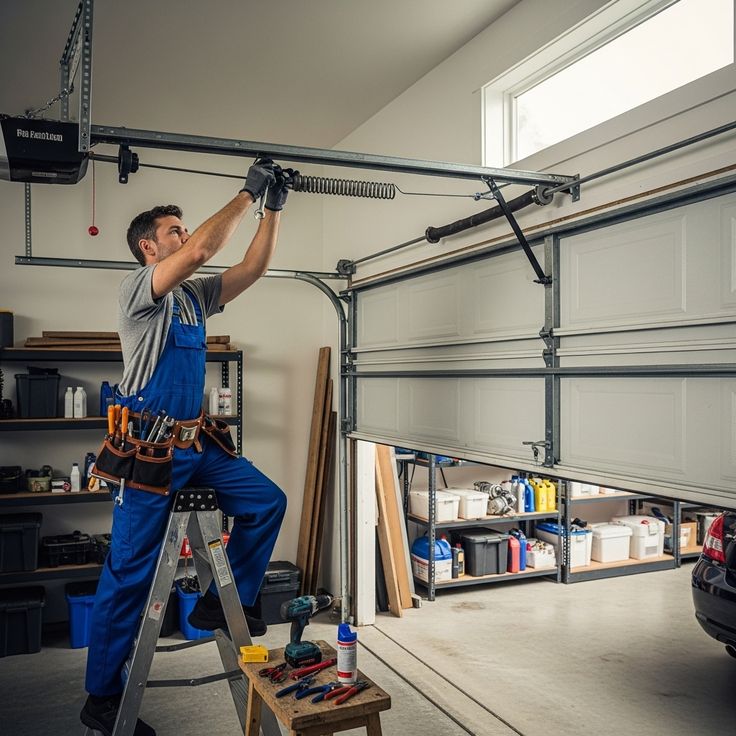
Your California garage door: spot the issue in minutes
You came for fast diagnosis—so picture this before your school run: dawn in Sacramento, your door shudders, bangs, then dies. Or it scrapes like metal-on-metal, only closes if you hold the wall button, or hangs uneven on one side. Frustrating, we know. In the next minutes, we’ll translate each symptom into the likely part—spring, sensor, cable, or track—so you can stay safe and decide what’s DIY and what needs a pro.
Chasing that same fast, safe clarity? On your Bay Area commute clock, the opener hums but nothing moves. The remote quit after last night’s outage, the door reverses in the afternoon sun, or a cable looks slack on one side. We get how disruptive that is. In one quick pass, we’ll map each symptom to the likely part and a safe next step—no guesswork. Why do these hiccups hit California garages so often? Local conditions aren’t gentle.
💡 Safety First
Heads up: springs and cables hold dangerous tension—one wrong move can injure you. We’ll show what’s safe (sensors, lube, resets) and where to stop and call a pro.
Why California Punishes Garage Doors
Before we draw the DIY line, you need to know why California creates these issues. On the coast (Bay Area), salty air accelerates corrosion on cables, springs, and bottom brackets. In the Valley (Sacramento/Modesto), 100°F heat softens weatherstripping and expands rails. Quakes and settling shake fasteners loose. Wildfire seasons and Public Safety Power Shutoff (PSPS) outages cut power to openers. Under UL 325 (the photo‑eye safety rule that requires auto‑reversal), sensors must stay aligned and clean. And SB‑969 (California’s battery‑backup law since 2019) makes backup power essential for safe egress.
Afternoon sun on west‑facing driveways can blind photo‑eyes, so doors reverse for “no reason.” Coastal garages benefit from stainless cables and nylon rollers; inland, UV and heat crack seals and dry out nylon. Small quakes and aftershocks nudge tracks out of plumb, creating a lopsided ride. Dust and ash in fire season gum up rollers. And when power goes out, battery‑backup openers keep you compliant and mobile. That’s why your symptoms feel random here. They’re not.
We work statewide—San Jose to Stockton, Elk Grove to Roseville, plus the greater Sacramento, East Bay, LA, and San Diego metros. Our techs know HOA quiet‑hour rules, coastal corrosion upgrades, and when cities require permits for full door replacements. We handle submittals, coordinate with property managers, and keep projects compliant without drama.
The Cost of Guessing Wrong
When a door misbehaves, forcing it rarely helps. Cranking track bolts tighter can pinch the door, bow sections, and cause rollers to climb out. Holding the wall button to “muscle it closed” strips opener gears or bends the rail. Worst case, you create a falling‑door hazard. Manufacturers can void warranties after improper adjustments, and insurers may deny claims when DIY spring or cable work is involved. We’ve seen minor sensor fixes turn into panel and opener replacements because someone kept hitting the remote.
Small mistakes get expensive fast. A misaligned track you “straighten” by hand can turn a $180 roller service into a $600 section repair. Overriding force settings to make it close? Expect a $250–$400 gear kit or a $450–$900 opener replacement. Meanwhile, your car stays trapped and your day derails. Add time for parts, HOA approvals, or a weekend emergency fee, and a five‑minute sensor clean you skipped becomes days of downtime. Save the headache—triage first, then act.
Here are the California DIY moves we see most—and why they backfire in our climate. Skim this, avoid the pain, and you’ll know exactly where to stop and call.
- Mistake 1: Oiling the tracks collects dust and ash; use silicone or lithium on rollers/hinges instead for smooth, quiet travel.
- Mistake 2: Bending a track by hand tweaks alignment, weakens steel, and risks a pop‑out—premature roller wear follows.
- Mistake 3: Cranking opener force to “make it close” defeats UL 325 safety reversal and can crush or jam the door.
- Mistake 4: Replacing only one torsion spring upsets balance; matched pairs share cycles, so the older spring soon fails.
- Mistake 5: Swapping sensors before checking sun glare, wiring, and alignment wastes money—shade, clean, and realign first.
- Mistake 6: Touching cables or torsion springs without proper bars and restraints risks whiplash injuries, lacerations, and property damage.
⚠️ Do Not Attempt High-Tension Work
Never clamp, unwind, or wind torsion springs or lift cables without the right bars, restraints, and training. These components store lethal energy and can release violently. If you’re unsure, stop and call us immediately.
Quick California Garage Door Triage: Find the Culprit Fast
If you’re unsure, pause—and use this quick triage to stay safe. Scan for your symptom, do the simple check, note risk, and apply the California tip. Then decide: DIY or call us for same-day help. Which symptom looks like yours?
| Symptom | Most likely part | Safe DIY check | Risk level | California tip |
|---|---|---|---|---|
| Heard a loud bang; door feels like dead weight | Torsion spring (counterbalance coil above the door) | Look for a 1–2 inch gap in the spring coil | High—spring stores lethal energy; do not attempt repairs | Do not lift; call a pro. Outages often expose weak springs |
| Door higher on one side or cable looks slack | Lift cable or extension spring (side-mounted counterbalance) | Compare cable tension and drum wrap on both sides | High—door can jam or drop; stop use and call | Small quakes loosen hardware; failure accelerates if ignored |
| Reverses before closing | Photo-eye sensors (safety beam near the floor) | Gently clean lenses; align until both indicator lights stay solid | Low—safe to troubleshoot without tools | Afternoon sun glare is common; shade or offset sensors |
| Remote opens but won’t close | Sensors or close-force limits (auto-reverse sensitivity) | Clean and align sensors; then verify close force and travel limits | Low—address sensors first; do not increase force to mask issues | Keep force within UL 325 (auto-reverse safety rule) intent |
| Works except during outages | Opener battery (backup pack inside/attached to motor) | Check battery status light; test backup by unplugging power | Low—replace battery every 2–3 years | SB 969 (California battery-backup law) requires compliant openers |
| Metal scraping or grinding sound | Track or end bearing plate (support bracket and bearing) | Look for rub marks, bends, or shifted brackets | Medium—noise means wear; stop if rubbing worsens | Quakes can skew tracks; re-secure loose fasteners promptly |
| Popping as it moves | Worn rollers (wheels in the tracks) | Inspect for cracked wheels or flat-spotted rollers | Medium—lube lightly; replace if damage visible | Coastal salt speeds wear; upgrade to nylon rollers with sealed bearings |
| Closes only when holding wall button | Sensor circuit or wall console lock (vacation mode) | Clean lenses; disable wall lock or vacation mode | Low—quick fix once lock is off | Kids toggling the lock is common; check first |
📩 Need a Second Opinion?
Text or email us a quick photo or 10‑second video for faster diagnosis—optional, free. Prefer to talk? Call and we’ll walk you through a safe next step.
DIY vs Pro: Fix It Safe, Fast
Since you can call and we’ll walk you through a safe next step, here’s the simple sequence we use to go from diagnosis to resolution in minutes, without risking fingers or a 200‑lb door.
Step 1: Confirm your symptom using the triage above, then snap clear photos of the part, labels, and the opener model sticker.
Step 2: Power and safety first—unplug the opener, lock the wall button, and keep kids, pets, and hands clear of moving parts.
Step 3: Do safe checks only—clean and align safety sensors, tighten loose hinge screws, and lubricate rollers and hinges with silicone or lithium. Never lube the tracks.
Step 4: For noise or drag, verify every track fastener is snug. Do not bend tracks. Note any kinks, rubs, or shifted brackets.
Step 5: If springs or cables are involved, stop. Schedule a licensed tech and photograph spring size tags and cycle stickers for faster matching.
Step 6: After the fix, test balance at half‑open and verify safety reversal (door stops and lifts when it hits a 2×4). Confirm sensors reverse properly.
Step 7: Plan prevention—log today’s service date, estimate daily cycles, and set quarterly reminders to lubricate and recheck hardware.
⛔ Pro-Only Repairs
Do not DIY torsion or extension springs, lift cables, bottom brackets, or opener drive gears. These store high energy and create pinch points that cause severe injury and major property damage.
If your spring is the culprit, skip the risk and book our certified team for garage door spring replacement and repair California—we size, balance, and test to code the same day in most metros.
Proof It Works Here: Fast Local Fixes
And yes—the same-day, code-tested approach we promised is exactly what we delivered. Elk Grove, 5 pm: a west-facing driveway had the photo-eyes (safety sensors near the floor) blinded by sun glare, so the door kept reversing. We cleaned the lenses, realigned the brackets with a slight offset, and it closed smoothly in one visit. If the opener needed more than tuning, our team handles garage door opener installation and repair California with quiet, battery-backup options.
San Jose: a loud bang mid-lift, then a door too heavy to budge. Diagnosis on arrival—snapped torsion spring. We replaced the matched pair, set correct torque, balanced the door at half-open, and verified auto-reversal under UL 325 (the national safety standard for reversing when an object is detected). From call to rolling again: same day.
Modesto, off-hours at a distribution bay: a forklift brushed the roll-up track and the door jammed half-open. We dispatched within 90 minutes, realigned the track, replaced worn bearings, and tension-checked the counterbalance so morning trucks could load on time. For multi-bay facilities, our commercial garage door repair services California prioritize uptime, safety checks, and coordinated scheduling with site managers. Not sure when repair beats replacement? We’ll map the math next.
Repair or Replace? A Simple California Rule of Thumb
You asked for the math—here it is. Use this table to weigh cost, downtime, safety, and code: SB 969 (battery‑backup law) and UL 325 (auto‑reversal safety rule). Pick the column that fits your situation.
| Situation | Repair is smarter when… | Replace is smarter when… | Typical cost range | Long-term value |
|---|---|---|---|---|
| Spring or cable failure (door suddenly heavy, loud bang, slack cable) | Door and sections are sound; matched spring cycles; no rusted bottom brackets; under ~15 years | Multiple age‑related failures, heavy corrosion near coast, door 20+ years, panels damaged | Repair: springs $300–$600; cables $180–$350. Full door $1,200–$4,500+ | New springs restore balance and safety; preserves curb appeal; minimal downtime |
| Damaged sections or panels (dent, rot, creased or bent edges) | Single panel damage; matching section available; track and frame are true | Multiple bent or rotted panels; discontinued model; chronic binding or warping | Panel plus labor $300–$900; repaint extra. Full door $1,200–$4,500+ | New door adds insulation (higher R‑value, insulation rating), fresh warranty, and quieter operation |
| Opener trouble (hums, won’t close with remote, random reversals) | Motor runs; sensors realign; travel and limit reset solves; minor gear or belt repair | Older unit lacks battery backup (SB 969 law) or rolling code security; frequent stalls | Repair $120–$350; replace with smart, quiet opener $450–$900 | Quieter, safer, compliant with SB 969; improved lighting, app control, better warranties |
| Chronic noise or drag (grinding, jerky, slow lift) | Lubrication and hardware tighten; swap to nylon rollers with sealed bearings | Track or frame warped; wood rot present; repeated callouts; upgrade to insulated steel or composite door | Service and rollers $180–$450; insulated door $1,200–$3,500+ | Lower noise, energy savings, tighter weatherseals; HOA (homeowners association) friendly |
| Commercial downtime (sectional or roll‑up stuck; dock blocked) | Minor track tune, roller and bearing service keep uptime; schedule off‑peak | Obsolete or unsafe hardware; repeated failures; upgrade for safety edges and controls | Case‑dependent; emergency rates; parts and labor quoted after site inspection | Improved reliability, safety upgrades, faster service cycles, planned maintenance agreements |
If your situation matches the replace column, request a free estimate for our garage door replacement services—we’ll confirm options, pricing, and timelines, then handle permits and haul‑away.
Keep It Smooth: California Maintenance Wins
You’ve decided what to fix or replace—now keep it running. Use this California‑tuned checklist for coast, valley, and foothills. Lube rollers and hinges with silicone or lithium, never the tracks.
- Monthly: Wipe and align photo-eyes (floor-level safety sensors); test reversal with a 2×4; half-lift balance check; listen for new grinding, popping, or rubs.
- Quarterly: Lubricate rollers and hinges with garage-rated silicone or lithium; snug hinge and track screws; inspect weatherstrip for sun cracks; replace if brittle.
- Before heat waves: Check opener force and travel; improve garage ventilation; shade or offset sensors to avoid afternoon glare on west-facing driveways.
- Before winter storms: Inspect bottom seal; clear driveway drains; clean track area of leaves; stop puddling at jambs with thresholds so wood and trim don’t swell.
- After quakes/high winds: Re-check brackets, struts, and tracks for movement; tighten loosened fasteners; if a roller popped or a track bent, stop using and call.
- Coastal tip: Rinse salt residue off hinges, cables, and bottom brackets; dry, then lube; consider stainless cables and nylon rollers with sealed bearings.
Planning a remodel, ADU (accessory dwelling unit), or new build? Ask about our garage door installation services for insulated, quiet, battery‑backup doors that fit California codes and HOAs (homeowners associations).
Door Stuck Now? 24/7 California Dispatch
Planning the perfect install is great—but if you’re stuck right now, we’ve got you. We dispatch 24/7 across Sacramento, San Jose, Stockton, Modesto, and surrounding areas. Typical emergencies we handle: stuck half‑open doors, cars trapped inside, broken springs, or doors off track. In metro zones, our average arrival window is 60–90 minutes. We’ll confirm your address, text a live ETA, and talk you through safe steps while a tech is en route.
While you wait, keep people and pets clear. If the door is open, don’t pull the red release—it can crash. If a spring or cable snapped, stop using the opener and unplug it. Most emergencies are fixed on the first visit; our trucks carry common springs, cables, rollers, and quiet openers. You’ll get a 22‑point safety check, clear pricing before work, and photos of the repair for your records.
For the fastest route to a tech, book our emergency garage door repair services California—dispatch is live 24/7 and we confirm ETA by text.Get 24/7 Emergency Help
Ready for Fast, Local Help?
You just saw how to get 24/7 help—now let’s book the fix on your schedule. You’ve learned to diagnose faster, stay safe, and stay compliant with SB 969 (California’s battery‑backup law) and UL 325 (the auto‑reversal safety standard). We help homeowners and facility managers across the Bay Area, Sacramento, and the Central Valley with same‑day routes. Tell us the symptom, snap a quick photo, and we’ll confirm price and ETA before we roll.
Prefer numbers? In metros we typically arrive in 60–90 minutes, carry common springs, cables, and openers, and complete a 22‑point safety check on every visit. You get clear pricing up front, a 2‑year labor warranty, and haul‑away/recycling when we replace. Quiet, battery‑backup, and smart upgrades are available, and our Spanish‑speaking team can assist. We cover NorCal through SoCal—San Jose, Oakland, Sacramento, Stockton, Modesto, Los Angeles, and San Diego. Ready to stop the guesswork and get rolling today?Schedule Service in California